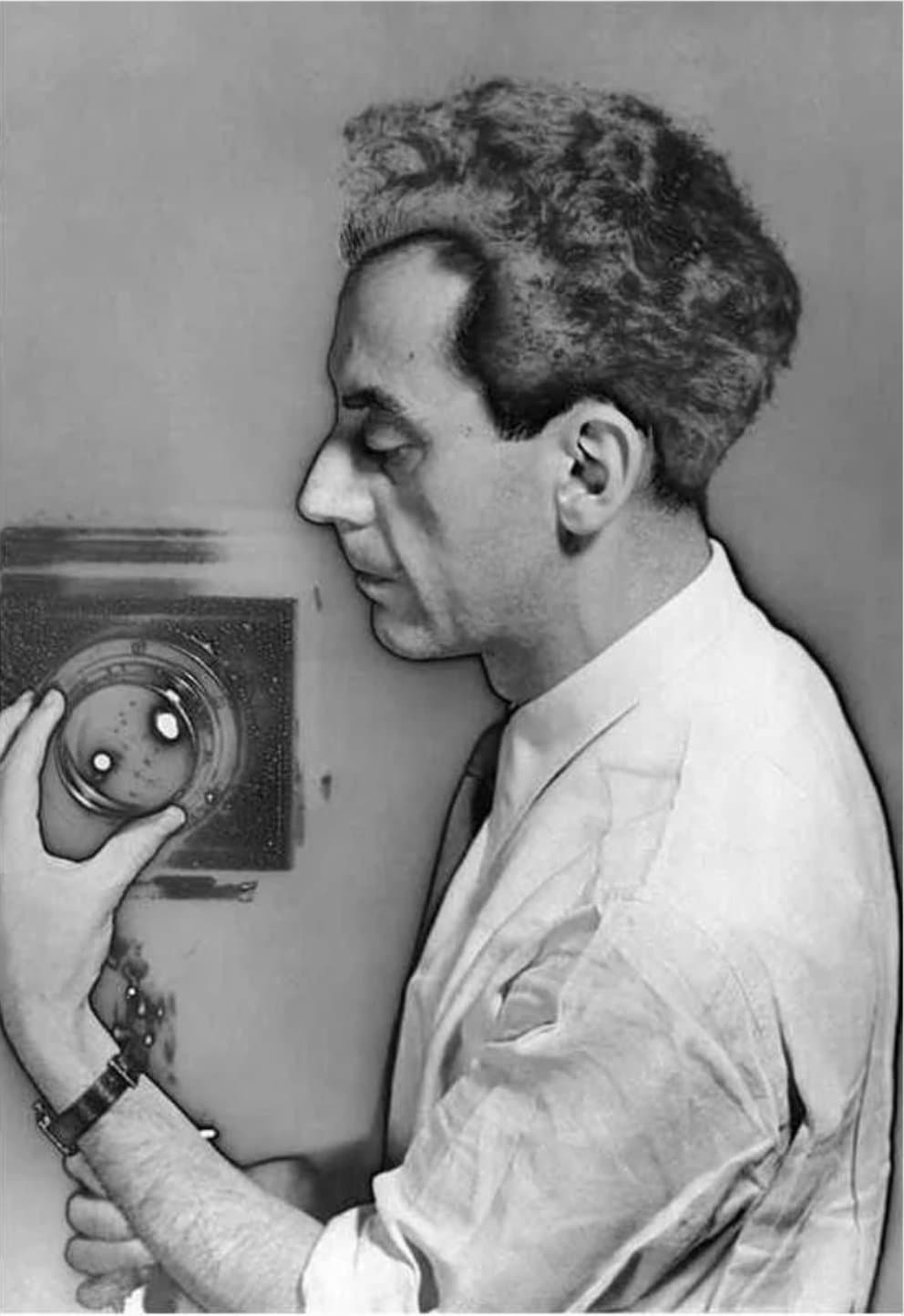
Man Ray - The Best Surrealists
Masters · 10/18/2026
How a Philadelphia-born painter turned the camera into a laboratory for chance, and made "mistakes" — solarization, photograms, blur — into a deliberate visual language.
Man Ray at a glance
| Full name | Emmanuel Radnitzky |
| Life | August 27, 1890, Philadelphia, USA – November 18, 1976, Paris, France |
| Nationality | American (based mainly in Paris) |
| Genres | Portraiture, fashion, Surrealist and Dada photography, photograms, film |
| Active | c. 1915–1976 |
| Places | Philadelphia, Brooklyn, Paris, Hollywood |
| Official / archive | manray.net, Man Ray Trust, The Art Story |
| Selected distinctions | Central figure of Dada and Surrealism; subject of major retrospectives at MoMA, Centre Pompidou, and the Getty |
Man Ray never called himself a photographer by vocation — he insisted, to the end of his life, that he was a painter who used a camera. That tension is the main mister of his artist's life - the way a man suspicious of photography's documentary claims became one of the medium's most consequential formal innovators, not despite that suspicion but because of it. He treated the darkroom the way a painter treats a studio — a place for intervention, not recording.
Life: from Brooklyn sign-painting to the Paris avant-garde
Emmanuel Radnitzky was born into a Russian-Jewish immigrant family in Philadelphia and grew up in Brooklyn. His father worked in tailoring, and his mother made clothing and patchwork. Drawing, measuring, cutting, and assembling belonged to the practical world around him before they became artistic procedures. He studied drafting and drawing at school, declined an architectural scholarship after graduating in 1908, and supported his ambitions through commercial art and illustration. His later training included the Ferrer Center's experimental educational environment.
The family adopted the surname Ray, and the artist fashioned Man Ray from his own nickname. The change offered a memorable signature while helping distance him from an immigrant identity exposed to prejudice.
New York provided competing models of artistic seriousness. Alfred Stieglitz's circle demonstrated photography's ambitions, while European modernism offered ways to dismantle inherited representation. Man Ray first approached the camera partly to reproduce his paintings. This practical beginning matters: photography entered his practice as a means of moving an artwork into another form, already raising questions about what a reproduction could become. The National Portrait Gallery dates his earliest photographic work to around 1916.
He married the poet Adon Lacroix in 1914 and met Marcel Duchamp the following year. Their friendship encouraged an art of ideas, displaced functions, and unreliable appearances. An ordinary object could be altered, renamed, or reframed until its original purpose became strange. The artist's task expanded beyond demonstrating manual skill: selection and presentation could themselves constitute an intervention.
 "To Be Looked at (from the Other Side of the Glass) with One Eye, Close to, for Almost an Hour", Marcel Duchamp, photo Man Ray, 1918
This was also an institutional project. In 1920, Katherine Dreier, Duchamp, and Man Ray established the Société Anonyme, connecting experimental art to exhibition and collection. His modernism developed through friendships, publications, and organizations as well as individual discovery. The persistent image of the solitary inventor leaves too much of that supporting structure outside the frame.
The studio between experiment and commission
Man Ray moved to Paris in 1921. Duchamp's connections helped him enter a network of artists and writers, but artistic acceptance did not guarantee financial security. Portraiture and fashion offered income and an arena for experimentation. Work associated with Paul Poiret, Vogue, and Harper's Bazaar placed unusual lighting, unexpected arrangements, and visual ambiguity inside the commercial circulation of images.
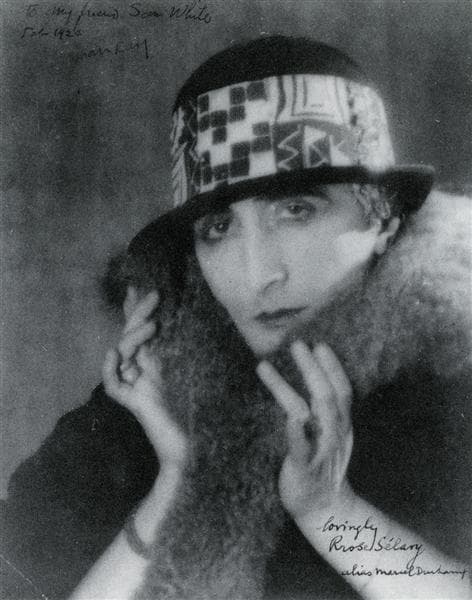 "Rrose Selavy alias Marcel Duchamp", 1921
The Paris studio became a meeting place and a productive setting. Its controlled space allowed a face to emerge from darkness, a neck to become an unfamiliar form, or an object to lose its ordinary scale. Celebrity portraiture made him visible within the cultural world he photographed. Yet the resulting archive contains more than a glamorous guest list. It records the construction of an avant-garde's public appearance: people who challenged artistic convention also needed recognizable portraits, publishers, patrons, and publicity.
Kiki de Montparnasse, born Alice Prin, was a singer, performer, painter, and recurring collaborator. Lee Miller arrived in Paris in 1929 with photographic ambitions of her own. Meret Oppenheim likewise belonged to this world as an artist, not simply as a photographed body. Their presence helped produce a visual language that later accounts too readily attributed to a single male intelligence. Naming their independent work changes how the studio can be understood.
 Untitled (Reflections), 1926
The camera also moved beyond the still photograph. Man Ray made experimental films during the 1920s, carrying discontinuity, abstraction, and encounters between objects into time. Le Retour à la raison extended his work with light-sensitive material into cinema in 1923. Across media, the recurring question was how to make an image escape the predictable meaning of its ingredients.
Method: the camera as a site of controlled accident
Man Ray worked across large- and medium-format view cameras in his Paris studio, producing a prolific commercial output of portraits and fashion images for Vogue, Vanity Fair, and Harper's Bazaar that financed his experimental practice. His most historically significant technical contributions happened without a camera at all. From 1922 he placed objects directly on photographic paper and exposed them to light, producing cameraless images he called "rayographs" — a renaming, not an invention, since the technique (the photogram) had earlier roots, but his naming and marketing of it as a personal method mattered to how it entered art history.
 "Untitled", 1922
Around 1929–30, working with his then-partner and collaborator Lee Miller, he developed striking solarized prints using the Sabattier effect — re-exposing a partially developed negative or print to light, producing a dark outline around forms. Authorship of the "rediscovery" is genuinely disputed: Miller's own account credits an accidental darkroom exposure in their shared studio, and later scholarship has pushed back against crediting Man Ray alone. This is not a footnote; it is a case study in how a male artist's name absorbed a female collaborator's technical contribution, a pattern that recurs through his career.
 ""Sleeping Woman", 1934
Major works
Rayograph series (1922 onward)
Everyday objects — combs, keys, spiral shapes, hands — arranged directly on photosensitive paper and exposed to light. The resulting silhouettes are indexical (a direct trace of the object) yet abstract, denying the camera's lens-based claim to perspectival truth. The series is arguably his most original contribution to photographic form, independent of subject matter or sitter.
One of the most famous is *"The Kiss" — an embrace assembled from exposures. Hands, the profiles of kissing heads, and the shapes of darkroom trays overlap in a space that cannot be reconstructed as a single scene.
The trays' projecting corners echo the approach of the faces. Equipment and bodies participate in the same visual rhythm, suggesting intimacy through correspondences between forms. Pale shapes seem to hover, but their relationship to the dark ground keeps changing as the eye moves. There is no stable foreground from which to organize everything else.
This is a particularly clear demonstration of photographic construction. The light-sensitive surface preserves actual interruptions of light, yet the resulting whole has no single real-world arrangement behind it. Its lyricism arises from successive decisions and their unpredictable interaction.
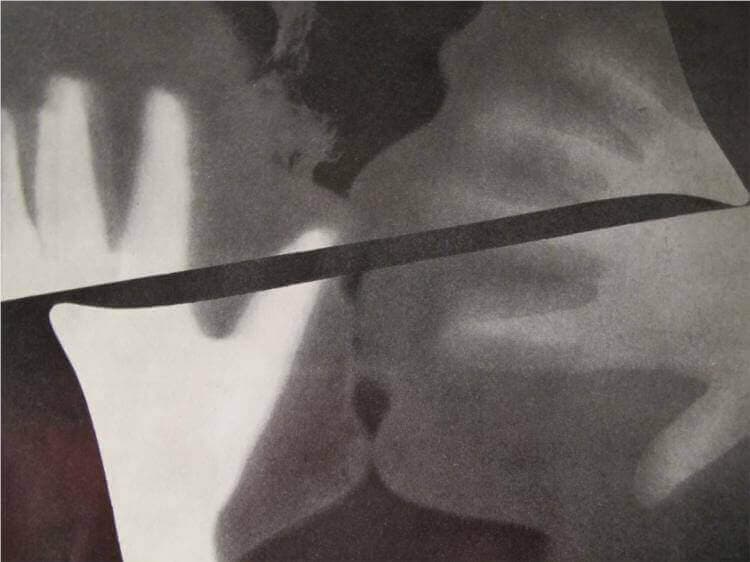 “Rayograph,”
"Rayograph", 1922
Électricité — the uncanny enters the corporate portfolio
Light bulbs, appliances, wires, and bodies become overlapping traces. Recognizable electrical devices appear alongside shapes that seem to radiate or float. The portfolio offers a way to imagine a largely invisible force through its effects on a photographic surface.
MoMA's description distinguishes nine photograms, several incorporating photographic negatives, from one layered photographic image. Calling all ten plates simple camera-less impressions would flatten that technical variety. Reproduced as gravures, the experiments also became a deliberately sequenced and distributable publication.
The commission complicates a clean separation between revolutionary art and advertising. The portfolio's commercial origin belongs inside its interpretation. Its strange inversions can make household technology desirable while withholding the uncomplicated clarity of a product demonstration. The uncertainty is part of its persuasive force.
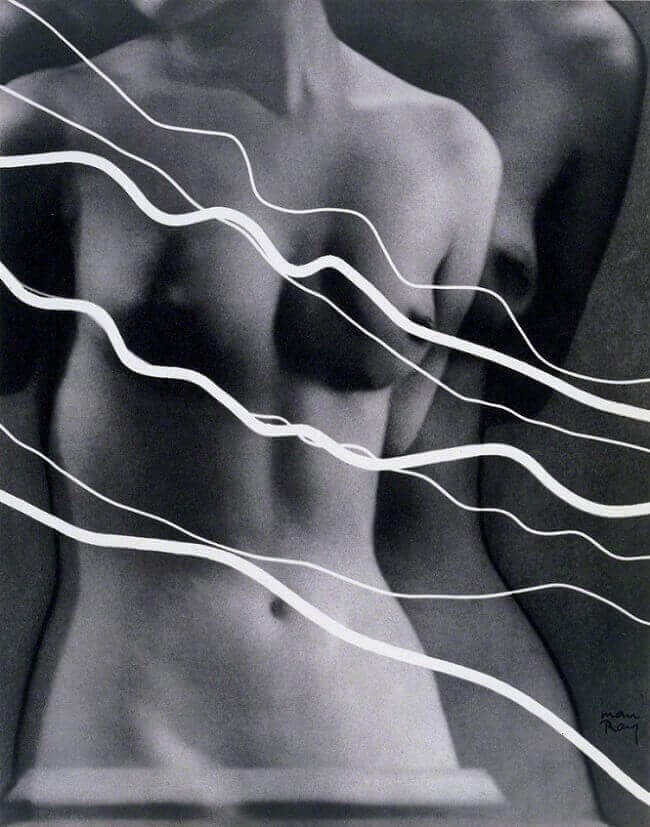 “Électricité”
, 1931
Lee Miller — a contour that refuses to settle
In this portrait, the contour becomes unusually emphatic. The face remains legible, but tonal reversal unsettles its relationship to the surrounding space. Light does more than model volume: it seems to separate the sitter from the world in which a conventional portrait would locate her.
The effect makes the photograph hover between a likeness and a graphic construction. Miller's presence supplies continuity while the photographic surface resists ordinary description. The portrait is significant both as an experiment and as a reminder that this language developed within a relationship between two practicing photographers.
 “Lee Miller”
, 1929
Le Violon d'Ingres (1924)
A photograph of Kiki de Montparnasse's bare back, overpainted with the f-holes of a violin, fusing her body with an instrument and with Ingres's odalisque paintings. The gesture — literally drawing on the photographic print — collapses the line between photography and painting that Man Ray always claimed to straddle. It is also a textbook case of the fragmented, objectified female body as Surrealist material, made by a man photographing his model and lover.
Kiki's turned back supplies a continuous curve; the head wrapping and pose recall Ingres's painted bathers. Her face appears in profile, while her arms disappear from view. These choices simplify the body's outline sufficiently for two added f-holes to make the torso read as a musical instrument.
The title invokes Ingres's violin playing and the French expression for a sideline or hobby. That wit has an uncomfortable edge: a woman's body becomes an instrument imagined for another person's use. Her visible presence and performance nevertheless exceed the diagram imposed upon her.
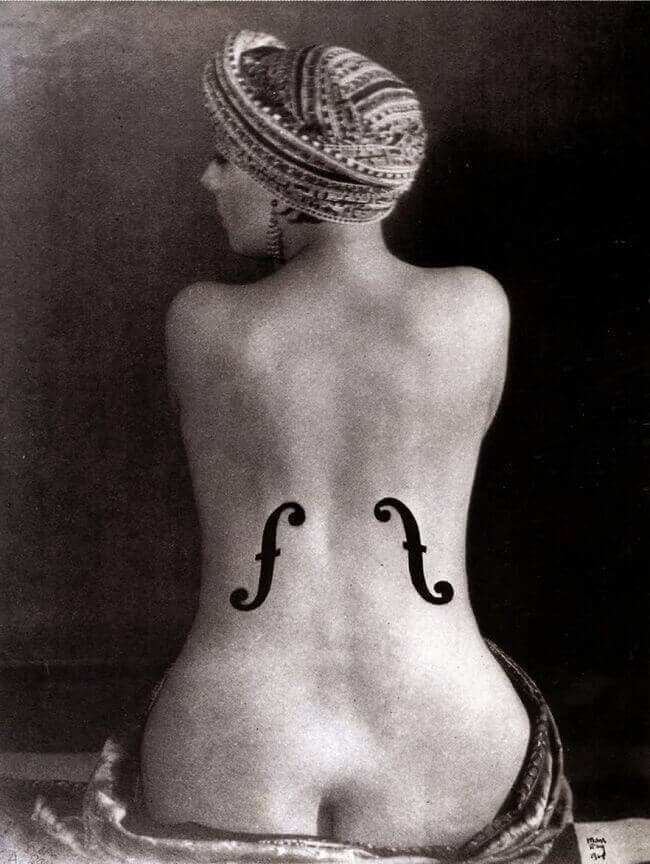 "Le Violon d'Ingres,"
"Le Violon d'Ingres", 1924
Noire et blanche (1926)
A portrait of Kiki de Montparnasse's face laid beside an African mask, both rendered in comparable tonal values. Celebrated for its formal elegance, it has also been read, critically, as participating in the era's primitivist aesthetics — using a non-Western object as a prop against a white European model's "civilized" beauty, a juxtaposition the Surrealists rarely interrogated.
Kiki rests her pale face horizontally beside an upright, dark Baule mask. Closed eyes, smooth surfaces, and related oval shapes encourage comparison, while the opposing orientations prevent the composition from becoming a static mirror. Lighting makes differences of material and tone as important as resemblance.
A purely formal reading leaves too much unexplained. The mask belonged to a cultural history that a Paris fashion photograph could suppress, turning an African object into a portable sign of the exotic. At the same time, the image's visual equivalence can disturb a simple hierarchy between a living European sitter and an allegedly inert artifact.
Scholar Wendy A. Grossman stresses this contradiction: the photographs could both repeat and unsettle contemporary racial and sexual fantasies. Recognizing that ambiguity gives the image more historical substance than either uncomplicated admiration or an assertion that its meaning is exhausted by appropriation.
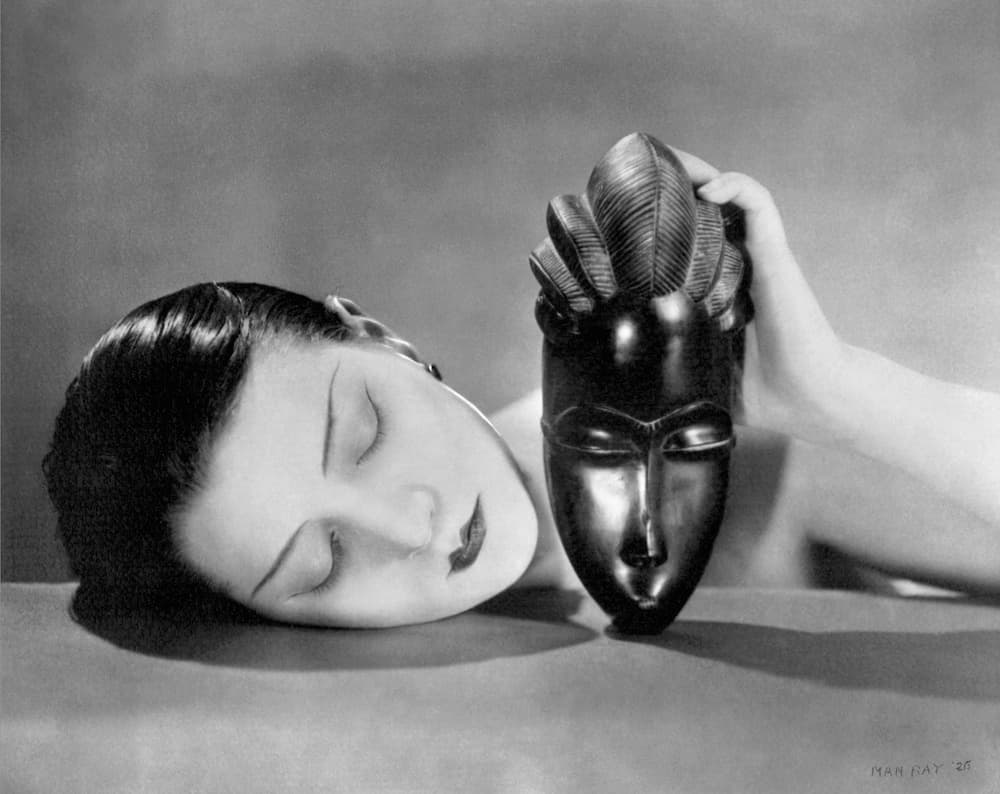 “Kiki, Noire et Blanche,”
"Noire et blanche", 1926
Larmes (Glass Tears) (1932)
An extreme close-up shows an upward glance, emphatic eyelashes, and rounded glass droplets. The drops catch light as discrete objects. Their exaggerated perfection competes with the emotional signal they are supposed to convey: sadness becomes something arranged, illuminated, and inspected.
The Met identifies the model as Lydia and states that the image originated as an advertisement for smudge-proof mascara. Following that record, the sitter is described here as a model. This account also makes the relation between commercial beauty and apparent emotional candor especially pointed.
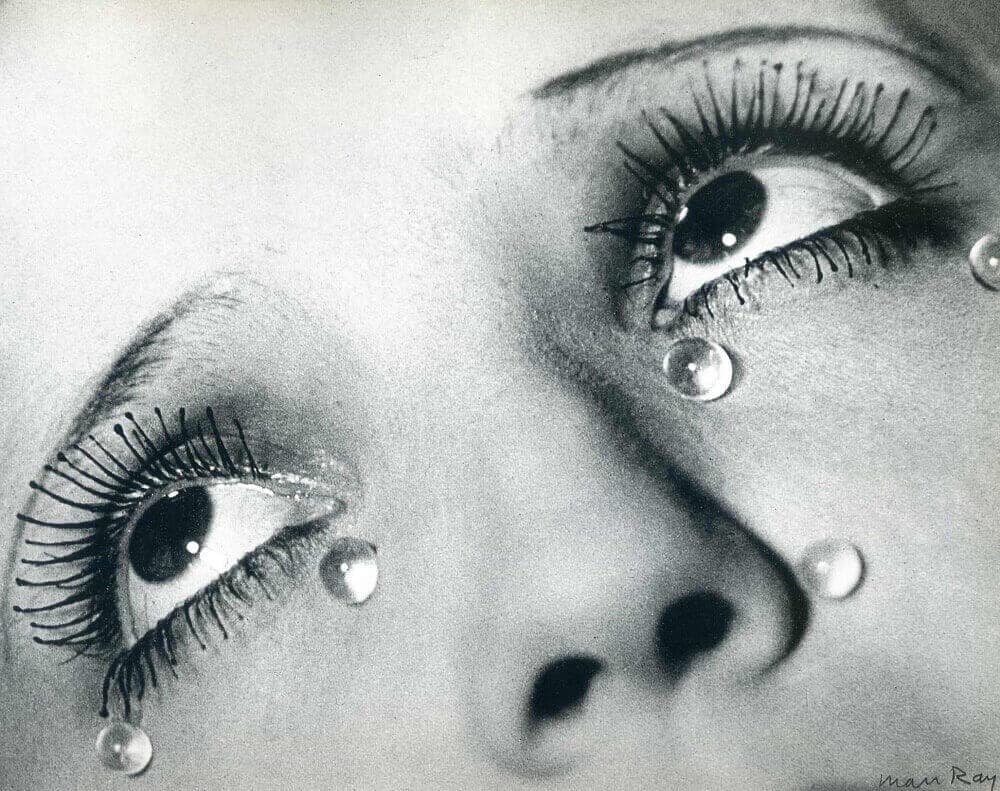 “Glass Tears (Les Larmes)”
"Glass Tears (Les Larmes)", 1932
The freedom to transform, and its limits
These works make an argument about photographic truth more interesting than the familiar claim that photographs can deceive. A rayograph records light with extraordinary directness, yet offers an invented space. Dust Breeding describes actual material while making its scale unreadable. Glass Tears accurately records a manufactured sign of feeling. Construction and observation operate together.
Man Ray's relationship to chance should therefore be understood as active. An accident matters because someone recognizes its potential, repeats a process, selects a result, and gives it a place among other images. Technical effects become expressive through judgment. Their importance survives the novelty of the procedure: an audience can know how a picture was made and still find its arrangement troubling or compelling.
The same freedom raises questions of power. Calling Kiki, Miller, Oppenheim, or Ady Fidelin a muse can acknowledge intimacy while obscuring work, initiative, and independent lives. Miller's contribution is documented, and scholars have increasingly recovered Fidelin's place within the circle. These corrections widen the history without requiring the opposite fiction that Man Ray contributed nothing of his own.
The ethical question is how much an image allows its ingredients to retain. A body can become a violin; a mask can become an oval; a collaborator can become a name in a caption. Looking closely means enjoying the formal transformation while recovering what its elegance leaves out. This is a critical position, not a claim to know the private intentions of every participant.
Return, repetition, and an unfinished reputation
War interrupted the Paris career. Man Ray left France in 1940 and settled in Hollywood, where he met Juliet Browner. He continued making portraits while giving substantial attention to painting. In 1951 he returned to Paris; his final home and studio was at 2 bis rue Férou. Writing, new photographic experiments, editions of earlier work, and retrospective exhibitions occupied the later decades.
It is tempting to treat those years as an appendix to the famous interwar pictures. Reprinting and remaking, however, were consistent with an artist who repeatedly moved an idea across materials. They also complicate the modern desire for one definitive original. A later print is a historical object with its own making, rather than a transparent substitute for an earlier one. Katherine Ware's In Focus survey traces a photographic practice extending from New York through Hollywood and the later Paris period.
Man Ray died in Paris on 18 November 1976. Juliet's subsequent preservation of his work and the establishment of the Trust helped sustain its circulation. Archival research has enlarged the picture further. Emmanuelle de L'Écotais's study records the 1994 arrival at the Musée national d'art moderne of approximately 12,000 negatives, 5,000 contact prints, and 70 prints, followed by a further donation in 1995. Such material allows variants and working decisions to challenge the simplified history built around a few icons.
Books
Selected books by Man Ray
| Book | Title | Author/editor | Year | Publisher | Why it matters |
|---|---|---|---|---|---|
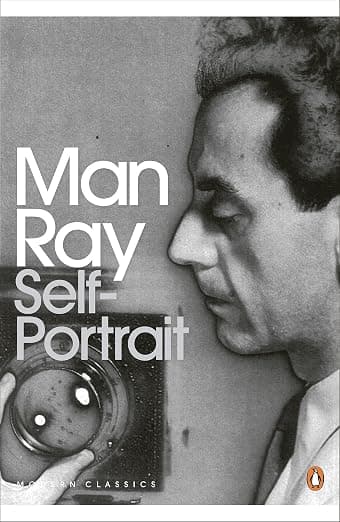 | Self Portrait | Man Ray | 2012 | Penguin | His own, unreliable, highly readable autobiography |
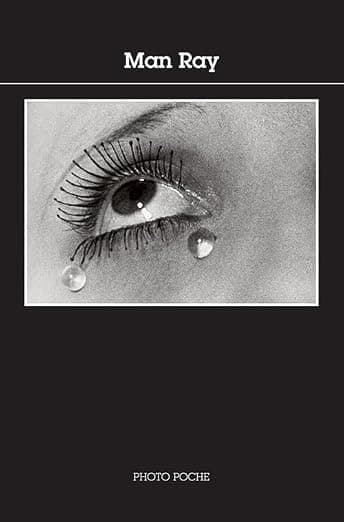 | Man Ray | Man Ray | 2005 | ACTES SUD | |
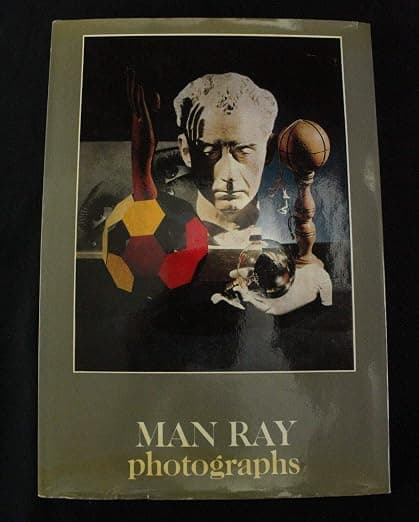 | Man Ray Photographs | Man Ray | 1982 | Thames & Hudson | 347 Duotone Plates |
 | This Is Man Ray | Man Ray | 2008 | DILECTA | +DVD |
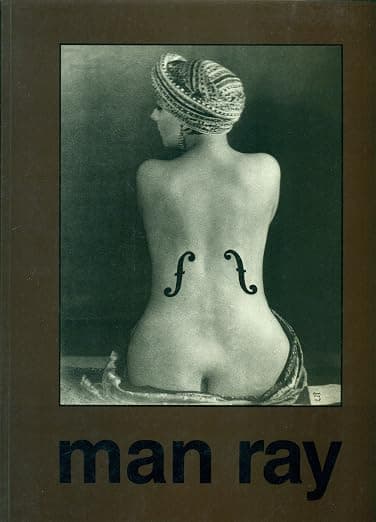 | Man Ray; 1890 - 1976 | Man Ray | 1989 | Taco Verlagsgesellschaft | English and German Edition |
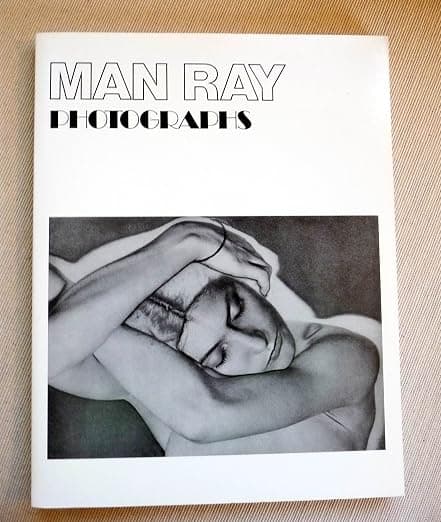 | Man Ray, photographs, 1920-1934 | Man Ray | 1975 | East River Press | |
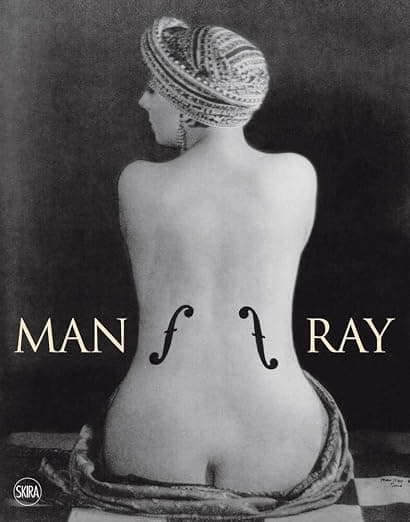 | Man Ray | Man Ray | 2011 | Skira | The publication describes the creation of some of his most famous pieces and the motifs-very often of females-that inspired the works. |
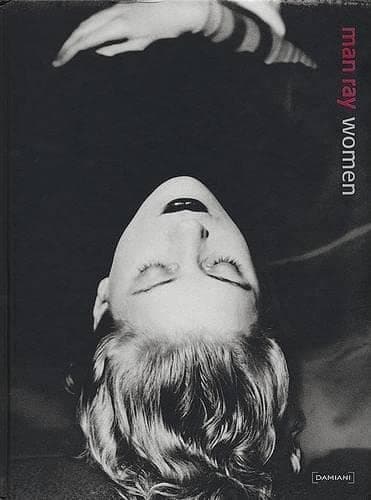 | Man Ray: Women | Man Ray | 2006 | Damiani | It includes fashion photography and advertising images; portraits of many artists, including Marcel Proust, Marcel Duchamp and Andre Breton; and a portfolio of 26 Femmes. |
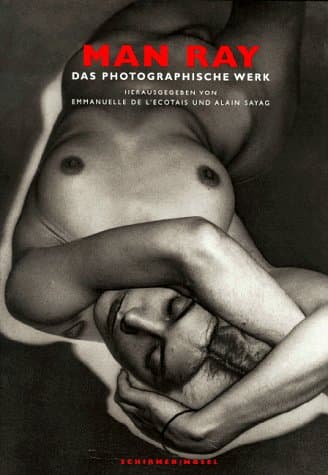 | Man Ray, Das photographische Werk | Man Ray | German Edition |
Books about Man Ray
| Book | Title | Author/editor | Year | Publisher | Focus |
|---|---|---|---|---|---|
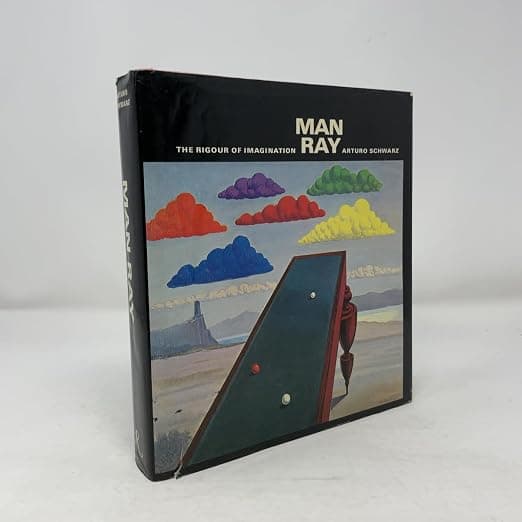 | Man Ray: The Rigour of Imagination | Jean-Hubert Martin et al. | 1977 | Thames & Hudson | Early scholarly survey of the full body of work |
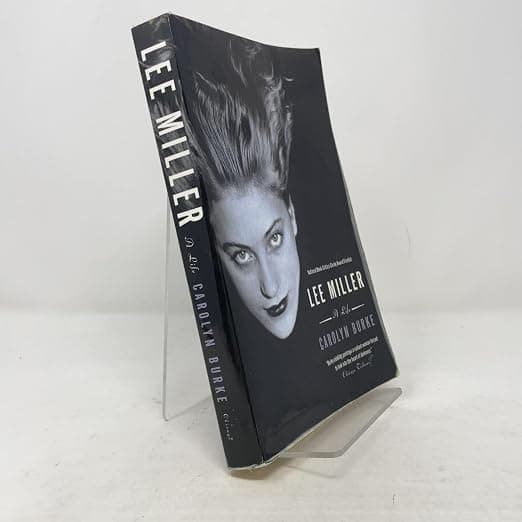 | Lee Miller: A Life | Carolyn Burke | 2007 | University of Chicago Press | Context for the Man Ray–Miller collaboration |
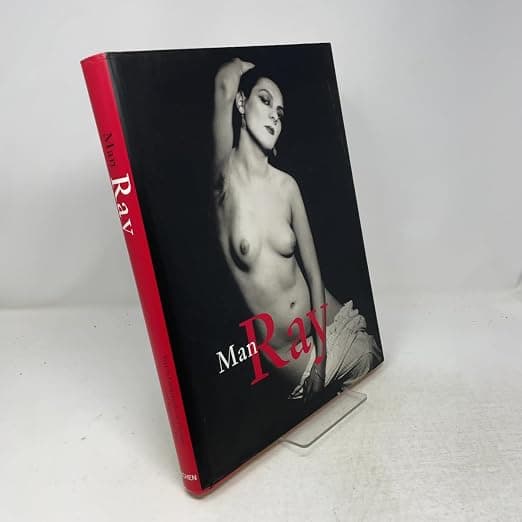 | Man Ray | Katherine Ware, Emmanuelle De L'Ecotais | 2000 | TASCHEN | This volume brings together the finest photographs from collections and archives around the world, representing the singular vision of Man Ray at his most dynamic and beautiful. |
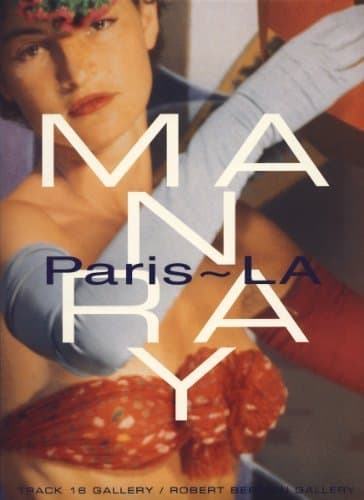 | Man Ray Paris - LA | Dickran Tashjian | 1996 | Smart Art Press | is the first-ever in-depth look at the life and art of Man Ray during the decade he spent in Southern California (1941–50). In this golden era of Hollywood history |
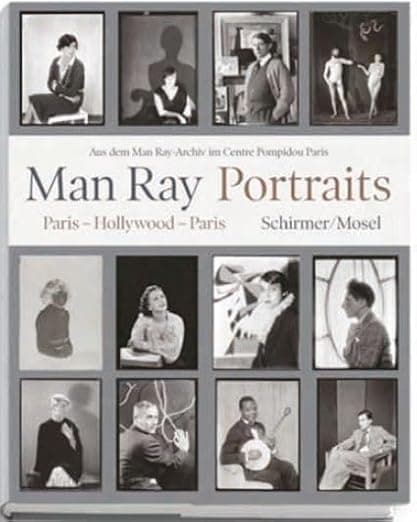 | Man Ray: Paris - Hollywood - Paris | Clemet Cheroux | 2011 | Schirmer Mosel | The catalog features 500 portraits, each of which is explained in a short commentary |
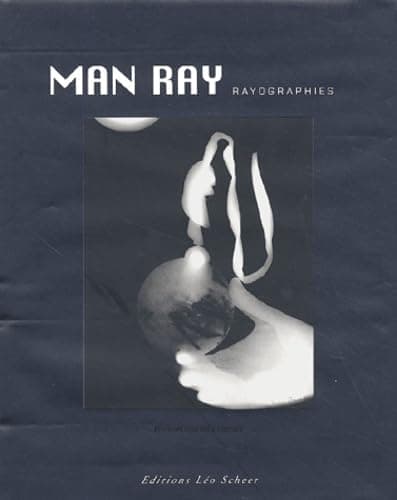 | Man ray, rayographies | Emmanuelle de L'Ecotais | 20102 | LEO SCHEER |
Films
Films and documentaries
| Film | Film title | Year | Director | Duration | Relevance |
|---|---|---|---|---|---|
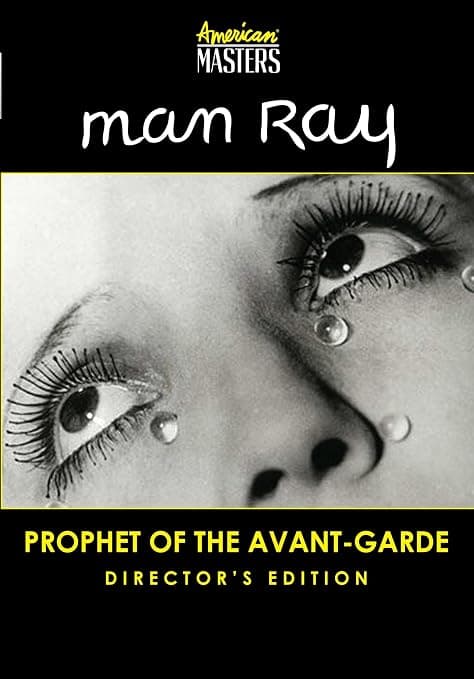 | Man Ray: Prophet of the Avant-Garde | 1999 | Neil Baldwin | 55 min | Covers the life and artwork of this innovative modern artist with both clips of interviews and archival footage of the times he lived in. |
| SURREALIST Master: REVEALING Man Ray's VISIONARY Lens | 2024 | 22 min | Discover the life and work of Man Ray, a pioneering figure in the world of photography and surrealism. | ||
| Man Ray | 2014 | Mário Luna | 30 min | Film revisits the modernist/surrealist Man Ray's collection of pictures and avant-garde films conjuring up the vanguard atmosphere which has represented the artist since the 20s | |
| The BEST Surrealists~Man Ray | 2015 | 50 min | Film about Man Ray the surrealist. |