Robert Doisneau and the Choreography of Chance
Masters · 9/10/2026
Robert Doisneau and the Choreography of Chance
How a self-effacing Parisian craftsman turned staged tenderness into the visual shorthand for postwar humanism — and what that shorthand conceals.
Robert Doisneau at a glance
| Full name | Robert Doisneau |
| Life | 14 April 1912, Gentilly, France – 1 April 1994, Montrouge, France |
| Nationality | French |
| Genres | Street photography, photojournalism, humanist documentary |
| Active | c. 1929 – early 1990s |
| Places | Paris and its suburbs (the banlieue) |
| Official / archive | Atelier Robert Doisneau · MoMA artist page |
| Selected distinctions | Prix Kodak (1947), Prix Niépce (1956), Grand Prix National de la Photographie (1983) |
The useful problem of a famous kiss
Robert Doisneau’s best-known photograph seems to offer a complete myth in one glance. In Le Baiser de l’Hôtel de Ville (1950) , a young couple kiss amid the current of a Paris street. Their dark clothes form a concentrated shape while pedestrians move around them, and the soft city behind them supplies atmosphere rather than explanation. The photograph has often been treated as spontaneous evidence that Paris itself produces romance. Yet the couple—Françoise Bornet and Jacques Carteaud, both acting students—posed for Doisneau as part of a Life magazine story about lovers in Paris. Legal claims in the 1990s helped bring that arrangement into public view; a French court rejected claims by other people who said they were the couple.
 Le Baiser de l’Hôtel de Ville*
Le Baiser de l’Hôtel de Ville, 1950
This discovery does not make the photograph worthless, but it changes the right question. Instead of asking whether Doisneau simply captured life “as it happened,” we should ask how observation, arrangement, editing, publication, and memory combine to make a persuasive photographic world. That question reaches far beyond one image. Doisneau watched patiently and often worked with unforeseen street events, but he also gave directions, collaborated with performers and friends, revisited favored locations, selected from contact sheets, and organized his archive thematically. His humane Paris is neither an inventory nor an innocent window. It is a carefully made counter-city, assembled from ordinary labor, childhood games, café theater, artistic friendship, and jokes produced by the alignment of bodies and things.
The most useful way to understand Doisneau, then, is not as a hunter of untouched “decisive moments,” nor as a manufacturer of charming fictions. He worked between those poles. His pictures propose that daily life contains small theatrical possibilities and that a photographer can recognize, encourage, or construct them without abandoning the social world in which they occur. Their delight is real, but it is designed.
From Gentilly to the printing trade
Doisneau was born on 14 April 1912 in Gentilly, just south of Paris. The suburb mattered. Although he became an international symbol of Paris, he spent much of his life in the southern periphery—in Gentilly and Montrouge—and photographed streets that fashionable representations of the capital usually ignored. At thirteen he entered the École Estienne, where he trained in engraving and lithography and graduated in 1929. This education gave him a craftsperson’s understanding of graphic reduction: the weight of black against white, the force of an outline, the relation between an image and a printed page.
He began photographing as a teenager, first choosing subjects that did not demand social confidence, such as paving stones, before turning his camera toward children and adults. Work in the Ullmann graphics studio connected photographic practice to advertising and reproduction. In 1931 he became an assistant to the modernist photographer André Vigneau, an important passage from commercial craft into photography as an imaginative medium. He sold his first picture story to the newspaper Excelsior in 1932.
The early photograph "La Poterne des Peupliers" (1934) already fixes on the zone where Paris thins into the banlieue. The title names a gate at the city’s edge rather than a monument at its center. In the official children portfolio, the image belongs to a sequence in which streets become stages and modest architecture becomes a frame for play. The visual importance of edges—walls, curbs, windows, railings—is partly an inheritance from graphic design. More importantly, the work announces a lasting choice: Doisneau would make the overlooked outskirts central.
 La Poterne des Peupliers
"La Poterne des Peupliers", 1934
Renault: machinery, discipline, and the human interval
In 1934 Doisneau joined Renault’s Boulogne-Billancourt factory as an industrial and advertising photographer. The job demanded clarity, dependable exposure, and the ability to translate large machines into legible forms. *Les Presses de Renault (1936) uses the press shop’s huge equipment to make scale itself the subject. Repeated metal planes and hard industrial light threaten to turn the worker into a minor component. Yet human presence provides the measure by which the machines become comprehensible. The picture is not simply picturesque Paris; it belongs to the visual culture of production.
 Les Presses de Renault
"Les Presses de Renault", 1936
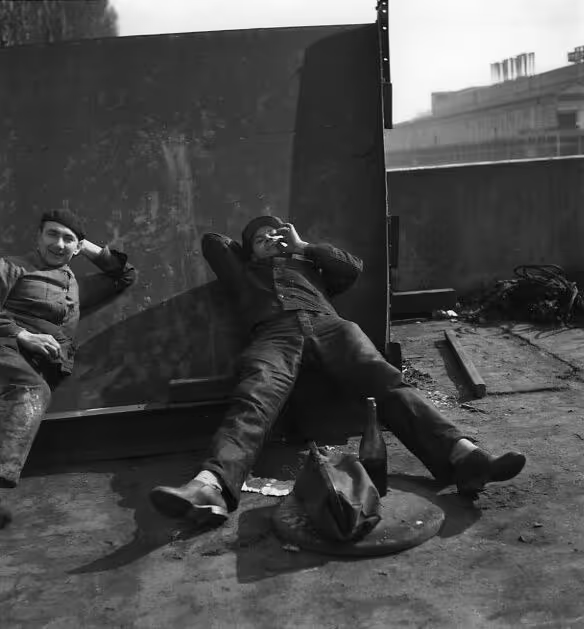
The Renault years sharpened a tension that would continue through Doisneau’s work. An assignment required the factory to appear ordered and productive, while an observant photographer could notice unofficial pauses, gestures, and social relations. In "La Pause" (1938), the title shifts attention from output to suspended labor. Even without treating the factory as a simple political symbol, the contrast is revealing: the institution values the machine’s continuity; Doisneau notices the worker’s interval. He was dismissed in 1939, reportedly for repeated lateness. The anecdote fits the later image of a wandering street photographer, but Renault should not be reduced to a comic prelude. It taught him how commissions shape pictures and how human behavior exceeds the commission.
 La Pause
"La Pause", 1938
In 1939 he joined the Rapho agency, which would remain his professional base for most of his career. The Second World War interrupted that path. He was drafted as a soldier and photographer, then during the occupation used his skills in lettering and engraving to produce false papers for the French Resistance. He also photographed wartime Paris and its liberation. The experience makes the later warmth of his imagery more historically specific. His postwar city is not carefree because suffering never existed; it is a proposal for renewed public life after occupation and scarcity.
Paris after the war: agency, magazine, and street
Doisneau returned to Rapho in 1946 after a brief period with the Alliance agency. In 1948 he began working for French Vogue, producing fashion, society, and reportage pictures until 1952. These assignments widened his access but also placed him inside a polished world that did not fully suit his strongest interests. His independent street practice concentrated on workers, children, concierges, musicians, market traders, and café regulars. The tension between editorial labor and personal wandering was productive: magazines supplied money and circulation, while the street supplied the social encounters from which his reputation grew.
La Musique des Puces (1944) shows his talent for turning a found environment into a visual ensemble. The flea-market setting surrounds performance with used things rather than a formal stage. Music, commerce, and spectatorship occupy the same compressed space. The instrument’s curves and the market’s clutter prevent the image from becoming a clean portrait; the photograph is about a temporary public made by attention. MoMA’s record identifies the work as a gelatin silver print, the black-and-white process associated with much of Doisneau’s career. Tonal contrast helps distinct objects remain readable even when the frame is crowded.
 "La Musique des Puces"
La Musique des Puces, 1944
In La Dame Indignée (1948), also associated with the famous series made from the art dealer Romi’s shop window, the display becomes a social experiment. A provocative painting is positioned where passersby will encounter it, and the camera records reactions through or near the window. The title—“The Indignant Lady”—already edits the event into a miniature drama. What appears to be a lucky street incident depends on placement, waiting, framing, and later naming. The window separates observer from observed while also layering artwork, reflection, and public response. It is a compact lesson in Doisneau’s method: reality supplies people and unpredictable reactions; the photographer builds the trap in which those reactions become visible.
 La Dame Indignée
"La Dame Indignée", 1948
L’Innocent (1949) similarly uses the café as a place where glances create a plot. Figures, glass, and pictorial details share a shallow field; the title encourages viewers to decide whether innocence is sincere or ironic. The picture does not resolve the social situation so much as make the act of looking its subject. That is why Doisneau’s humor rarely depends on a punch line alone. A viewer must inspect the edges and infer relations, becoming another participant in the chain of glances.
 L’Innocent
"L’Innocent", 1949
His first major book, La Banlieue de Paris (1949), paired his photographs with a text by Blaise Cendrars. The book gave the suburbs a sustained narrative form. Rather than treating the banlieue as an empty ring outside “real” Paris, it presented factories, wastelands, modest houses, streets, and inhabitants as a complex environment. The book format matters: sequencing can turn isolated observations into an argument about a place. A single child at play may appear timeless; placed beside work, transport, and damaged landscapes, the child becomes part of a changing urban ecology.
The kiss and the ethics of photographic theater
The 1950 Life assignment that produced Le Baiser de l’Hôtel de Ville joined reportage to performance. Doisneau encountered the young couple and asked them to pose at several locations. The central embrace was arranged, but the surrounding pedestrians and traffic were not choreographed. The resulting photograph therefore contains different degrees of control inside one frame: a directed foreground event, an uncontrolled public setting, and an editorial purpose supplied by the magazine.
That mixture raises an ethical issue about context rather than a simple test of truth versus falsehood. Staging is common in portraiture, fashion, advertising, and art photography. The problem arises when captions, layouts, or later circulation encourage viewers to read a directed scene as unplanned documentary proof. The image became vastly more famous as a poster decades after its original magazine appearance, when its assignment context was easy to lose. Its success depended partly on that loss: it could stand for an uncomplicated Paris of youth and affection.
Yet the photograph’s construction is also what gives it formal strength. The couple occupy a momentary clearing while other bodies pass; the slight softness around them suggests duration without isolating them from public life. They are performers, but they perform within a real flow that cannot be repeated exactly. Doisneau did not fabricate the whole city. He placed an event where chance could act upon it. A responsible viewing preserves both facts at once.
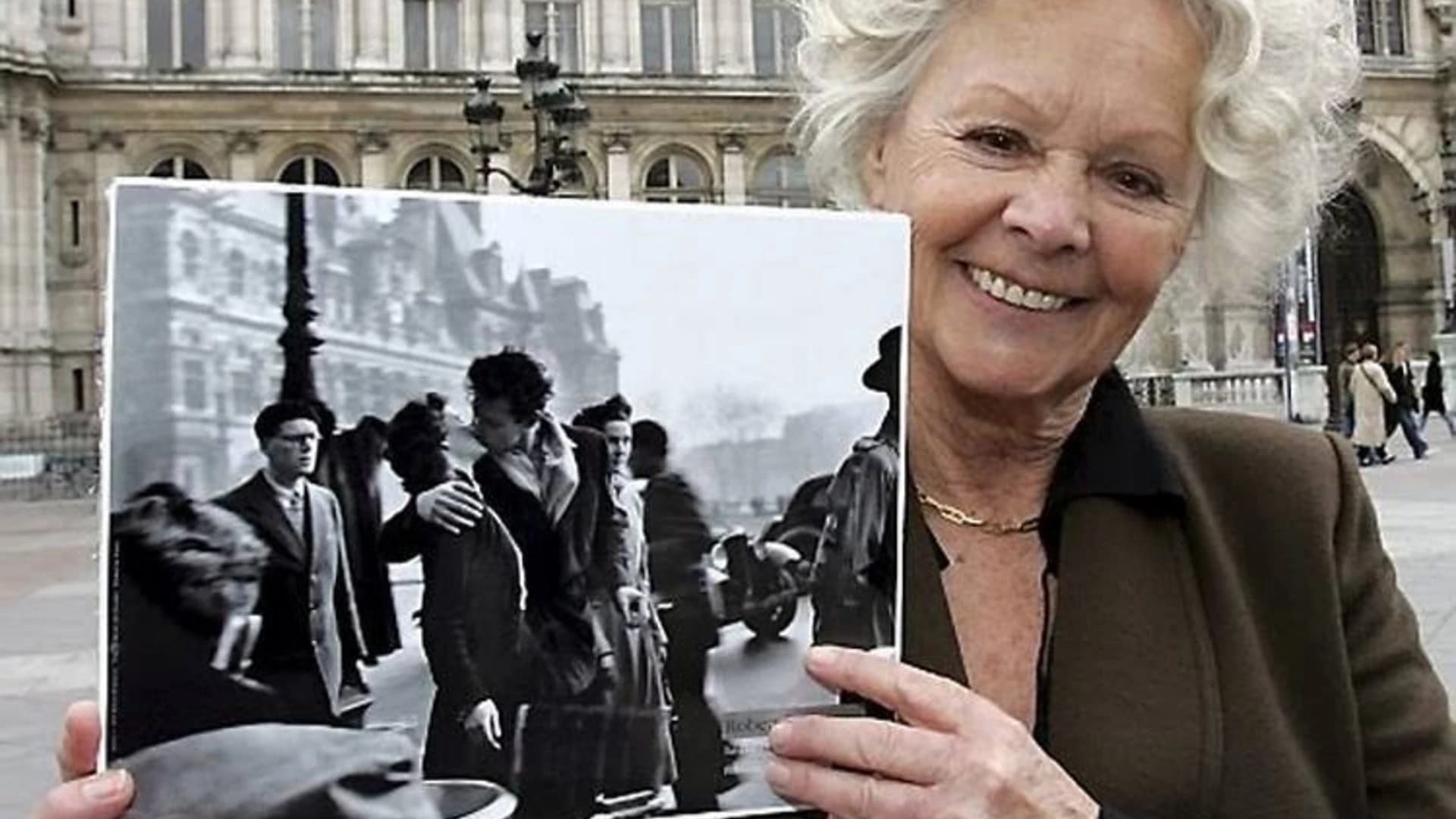 Françoise Bornet
, the original model, provided the original, numbered and stamped photograph, which was said to have been given to her by Robert Doisneau after the photo shoot.
Friendship, visual jokes, and collaboration
Doisneau’s portraits of artists are less concerned with psychological revelation than with the spaces, tools, and games of artistic life. Les Pains de Picasso (1952) places long loaves before Pablo Picasso so that the bread appears to extend from his arms like enormous fingers. The joke is immediately readable, but its simplicity depends on exact alignment. Bread, hands, and table turn portraiture into a collaboration between photographer and sitter. Picasso is not caught unaware; he participates in the making of his own comic image.
 "Les Pains de Picasso"
, 1952
This is a useful counterexample to the idea that a portrait becomes truthful only when the sitter forgets the camera. Here character emerges through play. The loaves connect artistic creation to ordinary food, collapsing the distance between celebrated painter and domestic table. The picture also shows Doisneau’s graphic intelligence: repeated pale forms stand against darker clothing, and the table creates a stage across the lower frame. It is simultaneously a likeness, a still life, and a visual pun.
Children offered another form of collaboration. In Le Nez au carreau (1953), the title—“Nose against the window”—turns the pane into both barrier and picture surface. The child’s face presses toward something desired or observed, while the viewer remains on the other side. Glass makes curiosity visible through posture. As elsewhere in Doisneau’s work, an architectural boundary becomes an emotional device. Children in his photographs are not merely decorations of innocence; they adapt the adult-built city into a field of games, dares, and discoveries.
 Le Nez au carreau
"Le Nez au carreau", 1953
Le Petit Balcon (1953) builds a café comedy from several simultaneous reactions. DePauw University’s collection record describes a young dancer leaning an arm over a seated man’s knee, his displeased wife beside him, and other patrons laughing. The crowded arrangement resembles a theater balcony, which helps explain the title. No single face supplies the meaning. The photograph moves the viewer from gesture to response to counter-response. Its humor is social and sequential, even though the exposure fixes one instant.
 Le Petit Balcon
, 1953
These pictures explain why “humanist photography” is a useful but incomplete label. The postwar French tendency associated with Doisneau, Willy Ronis, Édouard Boubat, Izis, and others valued ordinary people and shared urban life. Doisneau joined Le Groupe des XV, which promoted photography as an art and supported French photographic heritage. But humanism can become sentimental if it makes poverty, labor, or inequality merely picturesque. His best work resists that reduction through specificity: a factory press is not interchangeable with a café; a suburban street does not pretend to be a boulevard; humor depends on particular people occupying particular spaces.
A method of waiting, arranging, and editing
Doisneau’s method began with geography. He returned repeatedly to the southern suburbs, Les Halles, cafés, workshops, and streets near places he knew. Familiarity increased the likelihood of meaningful encounters. He was not simply roaming all of Paris at random. He built relationships with writers, musicians, shopkeepers, artists, and regulars who helped open social worlds to the camera.
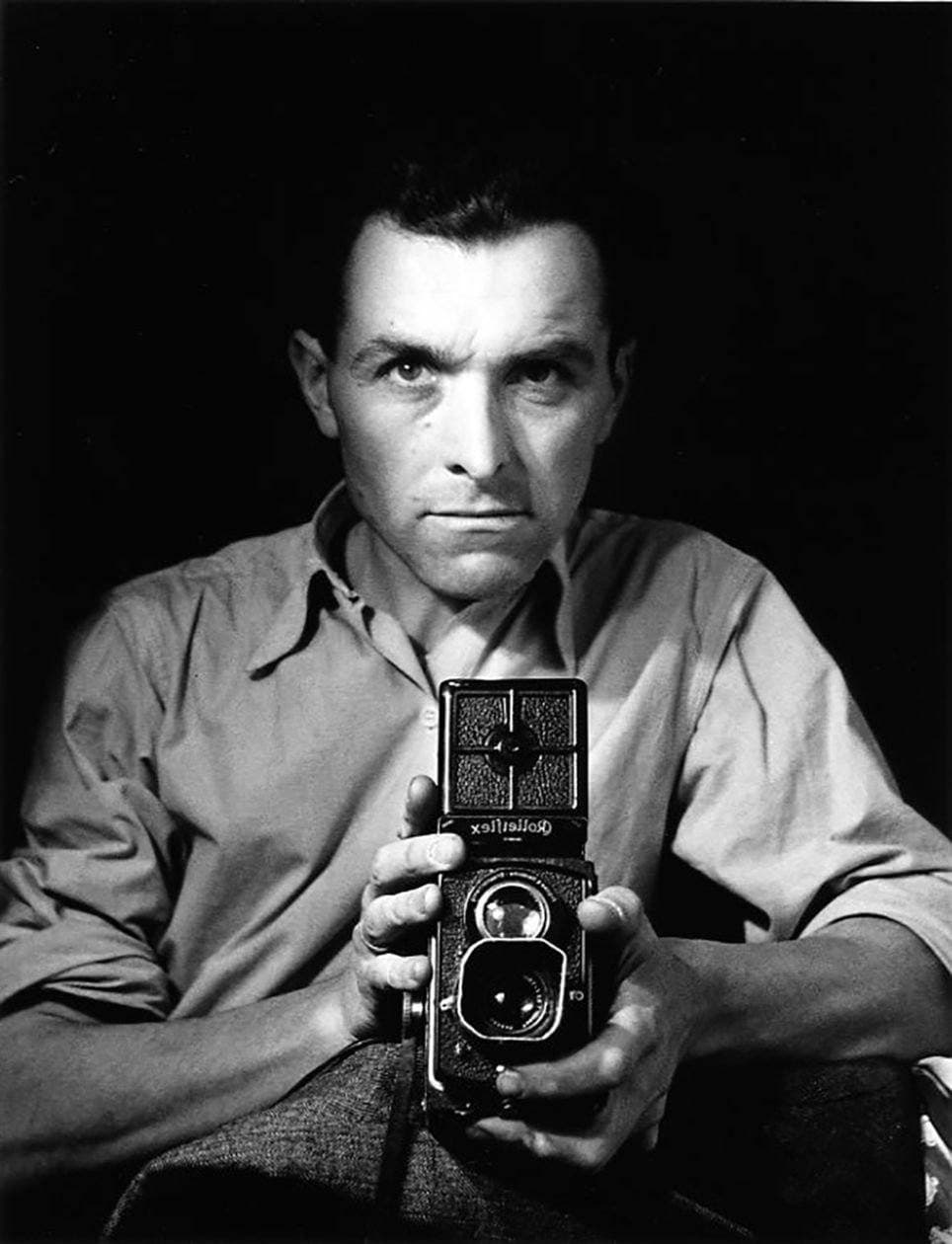
His surviving work is chiefly associated with black-and-white gelatin silver printing. Available light and the tonal range of streets and interiors supported pictures in which gesture mattered more than spectacular color. Accounts and portraits associate him especially with the Rolleiflex twin-lens reflex, although he used more than one camera over a long career and a complete equipment inventory was not verified for this essay. The waist-level finder of a Rolleiflex can support a quieter working posture than raising a camera to the eye, but equipment alone does not explain his discretion. Patience, repeated presence, and social ease mattered more.
 Robert Doisneau, at left, with André Kertész in Arles in 1975
Robert Doisneau (left) and André Kertész at the Rencontres Internationales de la Photographie, Arles, 1975. Photograph by Wolfgang H. Wögerer.
Recognition, late work, and the archive
Doisneau’s recognition grew across different parts of the photographic world. He received the Prix Kodak in 1947 and the Prix Niépce in 1956. Exhibitions and collections placed his work within art institutions as well as illustrated publishing; today the Museum of Modern Art lists twenty-three works in its online artist record. France awarded him the Grand Prix National de la Photographie in 1983, and he was made a Chevalier of the Légion d’honneur in 1984.
He continued photographing assignments, personalities, provincial France, and the changing capital. A revealing late rediscovery is the color commission now published as Palm Springs 1960. Its swimming pools, desert light, cars, and modern architecture differ sharply from the gray streets most associated with him. The project shows that the familiar “Doisneau look” was partly a result of what publishers and audiences repeatedly selected. An archive can restore alternatives that an artist’s popular reputation excludes.
"The world I tried to portray was one in which I felt good."
— Robert Doisneau, quoted in Peter Hamilton, Robert Doisneau: A Photographer's Life
Doisneau died in Paris on 1 April 1994. His daughters, Annette Doisneau and Francine Deroudille, established the Atelier Robert Doisneau in the Montrouge apartment where he had worked for more than fifty years.
They conserve and interpret negatives, authenticate works, supervise projects, and manage reproduction requests. The Atelier’s account of his portfolios reveals the importance of editing. From contact sheets he marked selected frames, then placed them into thematic categories. The online archive preserves fifty-one such themes, while the complete collection contains roughly 450,000 negatives. This scale changes the meaning of apparent luck. A famous fraction of a second rests on decades of work and an enormous field of rejected or less frequently published frames. Selection creates coherence after exposure.
The categories also make an authored worldview. “Children,” “Bistros,” “Painters and Sculptors,” “The Eiffel Tower,” “Les Halles,” and “Renault” connect commissions to personal interests and arrange different dates into recurring motifs. The archive does not merely store the past; it tells future viewers what kinds of relation to notice.
The archive has helped move interpretation beyond a small set of popular posters. Industrial pictures complicate the myth of the idle stroller. Contact sheets complicate the myth of effortless spontaneity. Commission records reveal the role of agencies and magazines. Staged scenes complicate the myth of transparent documentary truth. None of this diminishes the work. It makes the achievement more exact: Doisneau knew that ordinary life becomes photographic meaning only through position, timing, relation, and choice.
Why Doisneau still matters
Doisneau’s photographs remain inviting because they offer recognizable social actions rather than remote symbols: looking, pausing, working, playing, performing, waiting, and sharing space. Their accessibility can make them seem simple, especially when reproduced without dates or captions. Close attention reveals a more demanding photographer. Windows regulate sight; tables become stages; factory machines reorder the body; passersby complete arrangements they do not know they have entered. Humor is a way of studying power and attention, not an escape from reality.
His work also provides an unusually clear case study in photographic ethics. The camera does not divide neatly between candid truth and staged falsehood. A photograph can contain both direction and contingency. Its meaning can change when it moves from assignment to magazine, poster, gallery, auction, and website. A responsible history restores those contexts and distinguishes what the photograph shows from what its later legend claims.
The phrase “constructed chance” best describes this achievement. Doisneau cultivated situations in which accident could become form. Sometimes he waited; sometimes he enlisted collaborators; always he edited. His Paris is persuasive not because it is the whole city, but because it is a sustained, self-aware selection from it—a place where overlooked people briefly command the frame and where the ordinary becomes visible as an event.
Books
Selected books by Robert Doisneau
| Book | Title | Author/editor | Year | Publisher | Why it matters |
|---|---|---|---|---|---|
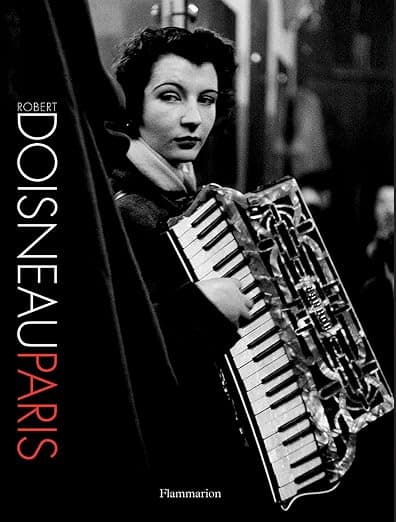 Robert Doisneau: Paris | Robert Doisneau: Paris | Robert Doisneau | 2023 | Flammarion | The photographs, edited by Doisneau's daughter, are complemented by citations from the photographer himself |
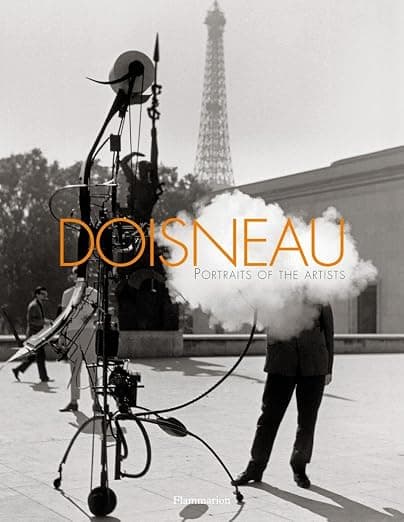 Doisneau: Portraits of the Artists | Doisneau: Portraits of the Artists | Robert Doisneau | 2008 | Flammarion | The book, which includes some previously unpublished photographs, shares Doisneau’s intimate view on the work and lives of these artists |
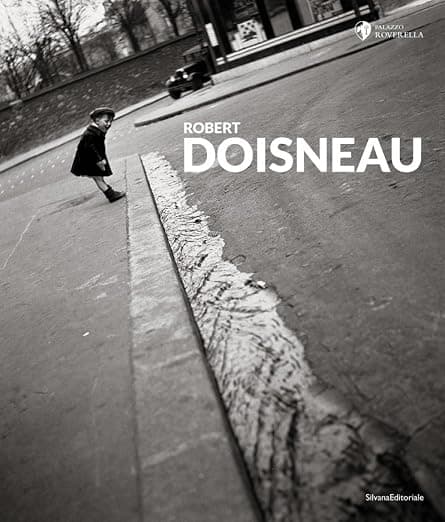 Robert Doisneau | Robert Doisneau | Robert Doisneau | 2022 | Silvana Editoriale | This hardcover volume features iconic works, as well as lesser-known images |
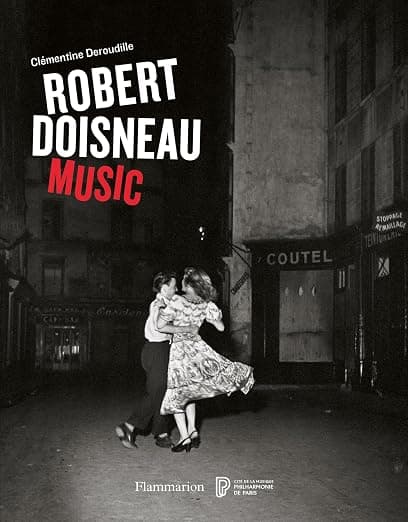 Robert Doisneau: Music | Robert Doisneau: Music | Robert Doisneau | 2019 | Flammarion | Photos of the stars seen posing for portraits or captured on stage, behind the scenes, or in the studio |
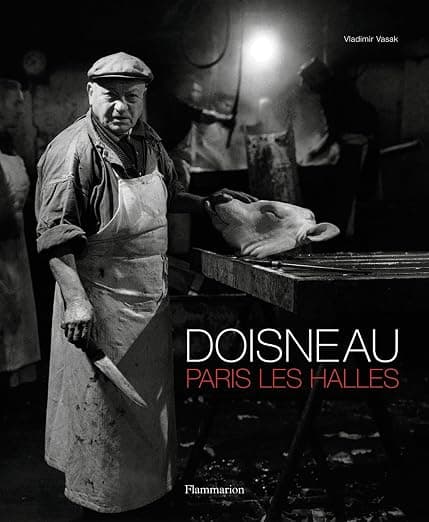 Doisneau - Paris les Halles | Doisneau - Paris les Halles | Robert Doisneau | 2011 | Flammarion | The book invites readers to relive the atmosphere of the era of of Les Halles redevelopment |
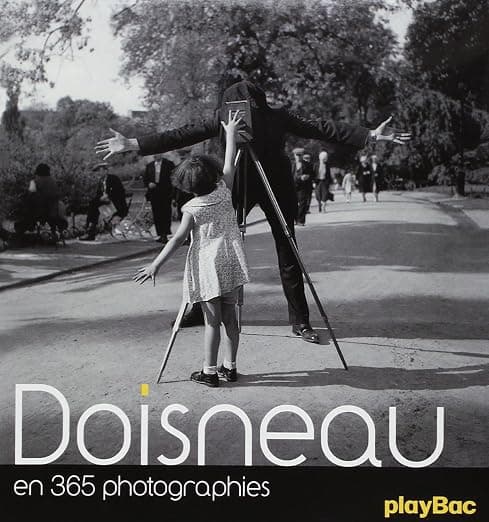 Calendier Robert Doisneau en 365 photos | Calendier Robert Doisneau en 365 photos | Robert Doisneau | 2013 | PLAY BAC |
Books about Robert Doisneau
| Book | Title | Author/editor | Year | Publisher | Focus |
|---|---|---|---|---|---|
 Robert Doisneau: A Photographer's Life | Robert Doisneau: A Photographer's Life | Peter Hamilton | 1995 | Abbeville Press | The first authorized biography of the Robert Doisneau, many of his photographs are reproduced for the first time |
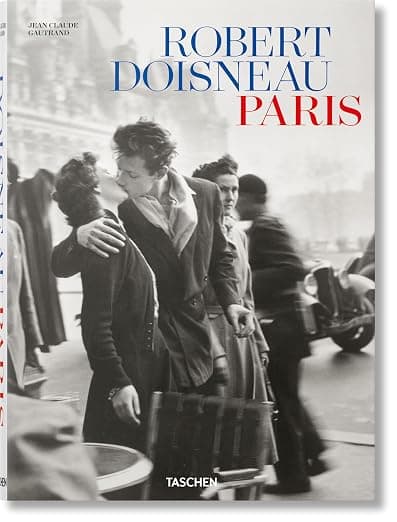 # Robert Doisneau: Paris | Robert Doisneau: Paris | Jean Claude Gautrand | 2024 | Taschen | Discover the life and work of Robert Doisneau |
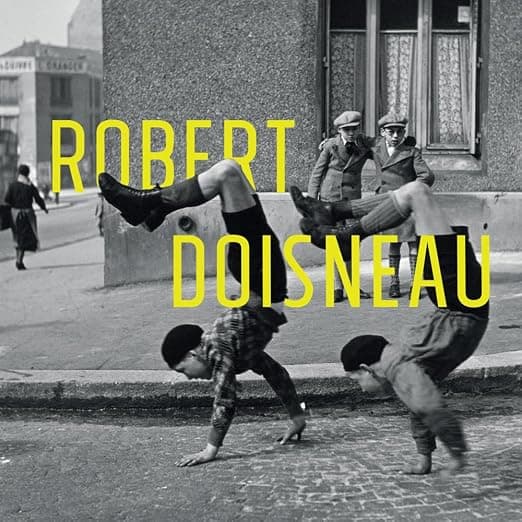 # Robert Doisneau | Robert Doisneau | Danielle Leenarts, Virginie Devillers | 2017 | Lannoo Publishers | The book is themed by three subjects: the main characteristics of his work and his importance for 20th century photography |
Films
| Film | Title | Year | Director | Production |
|---|---|---|---|---|
 Le révolté du merveilleux - Robert Doisneau | Le révolté du merveilleux - Robert Doisneau | 1995 | Clémentine Deroudille | Co-produced by ARTE France, Day for Night Productions, and INA |
 Contacts - The greatest photographers (series) | Contacts - The greatest photographers (series) | 1989 | Sylvain Roumette | CNP - La Sept and RIFF |
 Robert Doisneau, badaud de Paris, pêcheur d'images) | Robert Doisneau, badaud de Paris, pêcheur d'images | 1981 | François Porcile | Télé Europe |
 # Le Paris de Robert Doisneau | Le Paris de Robert Doisneau | 1981 | François Porcile | Télé Europe |
| Robert Doisneau: Capturing the Soul of 1950s Paris | 1979 | Patrick Jeudy | Point du jour, Agence Rapho | |
| Robert Doisneau's Glimpse of Eternity | ||||
| The POET of Paris Streets: Robert Doisneau's UNMATCHED Artistry |
Sources
Official website, estate, or archive
- Atelier Robert Doisneau — Official estate and archive
Museums, galleries, and archives
- Robert Doisneau — MoMA — Museum of Modern Art
- Robert Doisneau — Artsy — Artsy artist page
Interviews and primary sources
- Robert Doisneau — About Photography