Steve McCurry: Color, Witness, and the Cost of a Perfect Picture
Masters · 9/26/2026
How one photographer's most famous frame became both a landmark of documentary portraiture and a case study in the limits of that genre.
Steve McCurry at a glance
| Field | Details |
|---|---|
| Full name | Steve McCurry |
| Born | 1950, Philadelphia, Pennsylvania, United States |
| Nationality | American |
| Education | Film and cinematography studies at Pennsylvania State University; graduated in 1974 |
| Early work | Staff photographer at a Pennsylvania newspaper, followed by freelance travel in India and Pakistan |
| Breakthrough | Photographs made inside Afghanistan around the beginning of the Soviet invasion, 1979–80 |
| Magnum Photos | Joined in 1986; currently listed as a contributor |
| Best-known photograph | Afghan Girl, Nasir Bagh refugee camp, Pakistan, 1984 |
| Recurring subjects | Portraiture, migration, belief, work, travel, conflict’s aftermath, and everyday ritual |
| Characteristic approach | Strong color relationships, compact compositions, natural or available light, and close attention to gesture and gaze |
| Selected distinctions | Robert Capa Gold Medal; Royal Photographic Society Centenary Medal; International Photography Hall of Fame, 2019 |
On a winter morning in 1984, inside a school tent in Pakistan’s Nasir Bagh refugee camp, Steve McCurry made a portrait that would come to represent far more than one encounter. The girl was Sharbat Gula, though the world would not learn her name for seventeen years. Her direct gaze, the green wall behind her, and the red fabric framing her face formed an image of extraordinary visual concentration. When National Geographic placed it on its June 1985 cover, the photograph became an emblem of displacement, of Afghanistan, and eventually of McCurry himself.
That history contains both the achievement and the difficulty of McCurry’s work. His saturated color, lucid geometry, and attention to faces can make a distant situation feel immediate. Yet the same formal control can turn complicated lives into apparently timeless icons, detached from the social conditions around them. McCurry’s career is therefore most revealing when admiration and scrutiny remain together. His pictures demonstrate how color can carry documentary meaning; they also show why captions, consent, editing, and the photographer’s position matter whenever beauty claims the authority of witness.
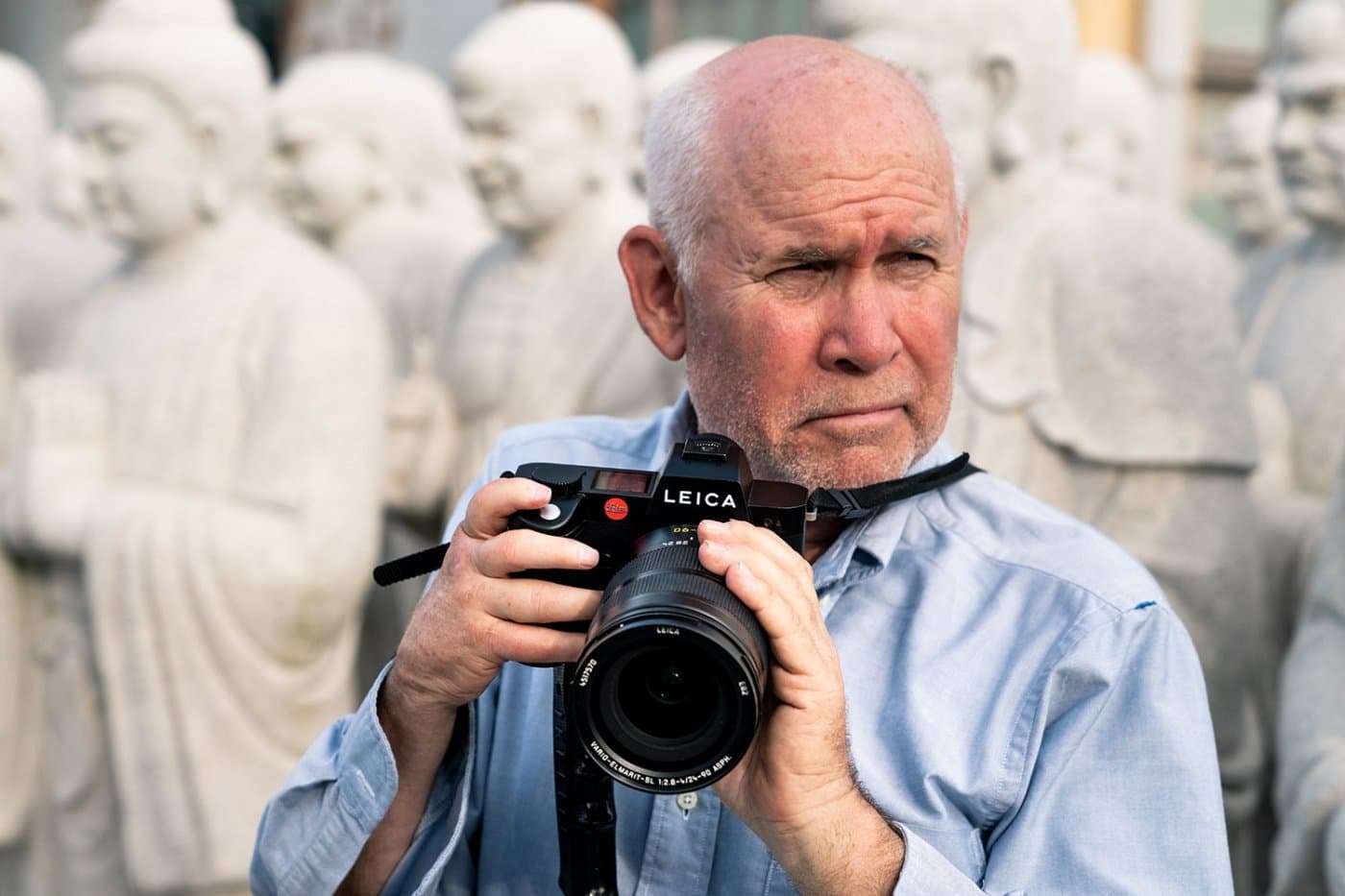
 Steve McCurry
 next to Afghan Girl, with his portrait of Sharbat Gula, taken nearly two decades later, in the background. Photograph: Ulrich Perrey/AFP
From film school to Afghanistan
McCurry was born in Philadelphia in 1950 and studied cinematography at Penn State. Film mattered to his later photography not only as a technology but as a way of organizing experience: his strongest pictures often feel like complete scenes compressed into a single frame. After university he worked for a local newspaper. The job supplied practical discipline, but he soon left for a longer and less predictable education abroad.
In 1978 he travelled to India with clothes in one suitcase and film in another. He had planned a relatively short trip; it extended into roughly two years. India became both a subject and a recurring base of visual ideas: crowds divided by architecture, figures isolated by color, rituals unfolding beside ordinary commerce, and old forms sharing the frame with modern life. The country would remain central to his books, exhibitions, and reputation.
After travelling through India, McCurry reached Pakistan and encountered Afghan refugees. With their help he crossed into Afghanistan before the Soviet invasion closed the country to most Western journalists. He returned with exposed film sewn into his clothes. The resulting photographs were among the early widely circulated views of the conflict and earned him the Robert Capa Gold Medal. During the following decades he covered wars and political upheavals in several countries, while also photographing pilgrimage, labor, domestic life, weather, landscape, and travel.
The chronology matters because McCurry’s public identity was formed through photojournalism. Even when his later work moved toward books, exhibitions, commissions, and fine-art prints, viewers continued to approach his pictures with documentary expectations. Magnum’s profile now describes him as a contributor rather than a full member, but it still situates his career in the traditions of reportage and humanist photography.
A method built from looking
McCurry’s pictures are frequently discussed as feats of color, but color is only one part of their construction. He looks for visual correspondences: a garment repeating a painted wall, a face held between areas of darkness, or a moving body precisely separated from a patterned ground. These relations make crowded places legible. They also create the impression that the world has briefly organized itself for the camera.
For much of his career he used Kodachrome, a slow color transparency film known for stability and dense, distinctive color. The film rewarded careful exposure and provided little room for correction after the fact. Afghan Girl is widely documented as having been made on Kodachrome 64 with a Nikon FM2 and a Nikkor 105mm lens. The moderate telephoto perspective compresses the space and places the background close to the subject, while shallow depth of field keeps attention on the face. The result is technically restrained: no theatrical set and no elaborate lighting, only a precise alignment of available light, color, and distance.
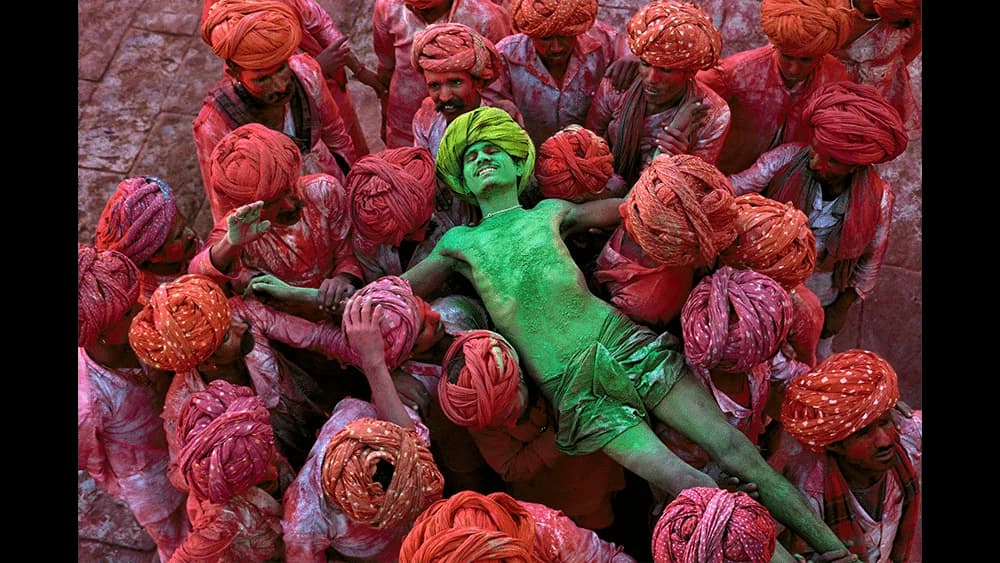 "Holi Festival", Rajasthan, India, 1996
McCurry’s method also depends on duration. He walks, watches, and often waits for a gesture to complete a composition already sensed in the environment. In portraits he favors direct attention rather than the stolen expression associated with much street photography. That approach can create an intense exchange, but the photograph records only the fraction of the relationship visible to the lens. A returned gaze is not, by itself, proof of equal power or informed agreement about future circulation.
His preference for the self-contained image is explicit. On his Magnum profile, McCurry says that an individual photograph should stand on its own. This helps explain the memorability of his best frames, yet it also identifies a limit: when a picture becomes independent of its sequence, caption, or assignment, the social world outside its edges can disappear.
Major works and the arguments inside them
Afghan Girl, Pakistan, 1984
The portrait’s force comes from a tightly controlled opposition. Green eyes and green background form one plane; the weathered red fabric forms another. The tear in the garment interrupts the otherwise balanced arrangement, and the face is placed close enough that the viewer cannot comfortably remain detached. Her expression has often been treated as a universal symbol, but universality is not neutral. For years she was known through a title rather than her name, while the image circulated globally and accrued meanings she did not choose.
National Geographic’s 2002 account says Gula agreed to be photographed in the school tent. It also records that she did not know how widely the picture had circulated. The distinction is essential: permission for an exposure and informed understanding of decades of reproduction are not the same thing. Reading the portrait responsibly means recognizing both the photograph’s formal power and Sharbat Gula’s life beyond its frame.
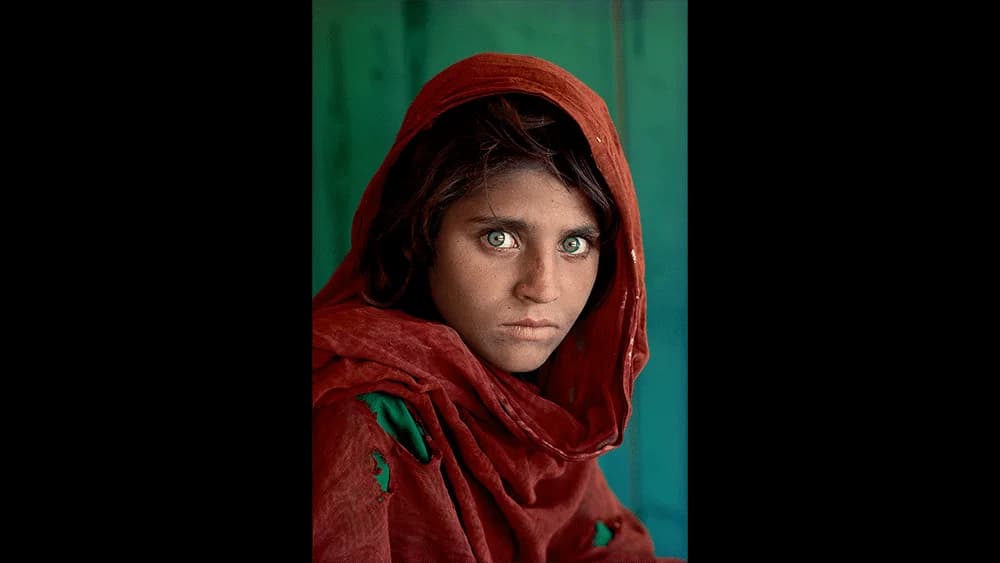 "The Afghan Girl: A Life Revealed* — National Geographic
"The Afghan Girl: A Life Revealed" — National Geographic, 1985
Dust Storm, Rajasthan, India, 1983
Women cluster beneath and behind red fabric as airborne dust reduces the landscape to a muted field. The figures are not simply isolated by the storm; they become a single irregular shape against the beige atmosphere. Red supplies both protection and visual alarm. McCurry turns weather into structure: visibility contracts, spatial depth collapses, and the photograph’s meaning concentrates in the tension between vulnerability and collective shelter.
The image also establishes a recurring McCurry formula—intense local color set against an environment nearly drained of color. It is compelling because the formal device grows from the event itself. Yet when separated from its caption, the picture risks becoming a generalized vision of an “ancient” Rajasthan rather than a particular moment experienced by particular people.
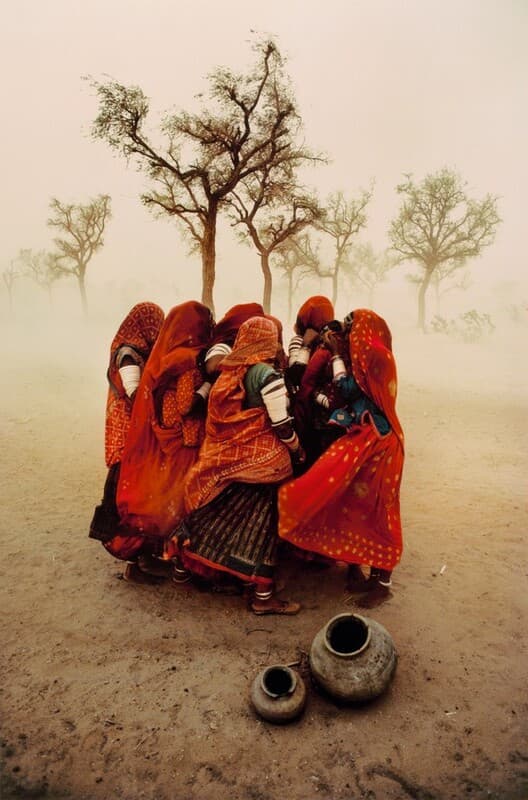 official Fine Art Prints catalogue — “Dust Storm (Vertical),” INDIA-10219
"Dust Storm", Rajasthan, India, 1984
Boy in Mid-Flight, Jodhpur, India, 2007
A running child appears suspended before a blue wall marked by red handprints. The photograph is a study in timing, but its wit depends equally on surface. The wall reads almost like a stage backdrop; the boy’s body becomes a dark calligraphic mark between the repeated hands. McCurry’s shutter turns an ordinary run into something improbable, close to levitation.
This is visual storytelling at its most economical. The picture does not need a crisis to hold attention. At the same time, its near-perfect arrangement demonstrates why viewers sometimes suspect staging even when none is documented: McCurry selects moments that look designed. The appropriate critical response is not to assume fabrication, but to distinguish the evidentiary claim of a captioned report from the imaginative pleasure of a finely timed street photograph.
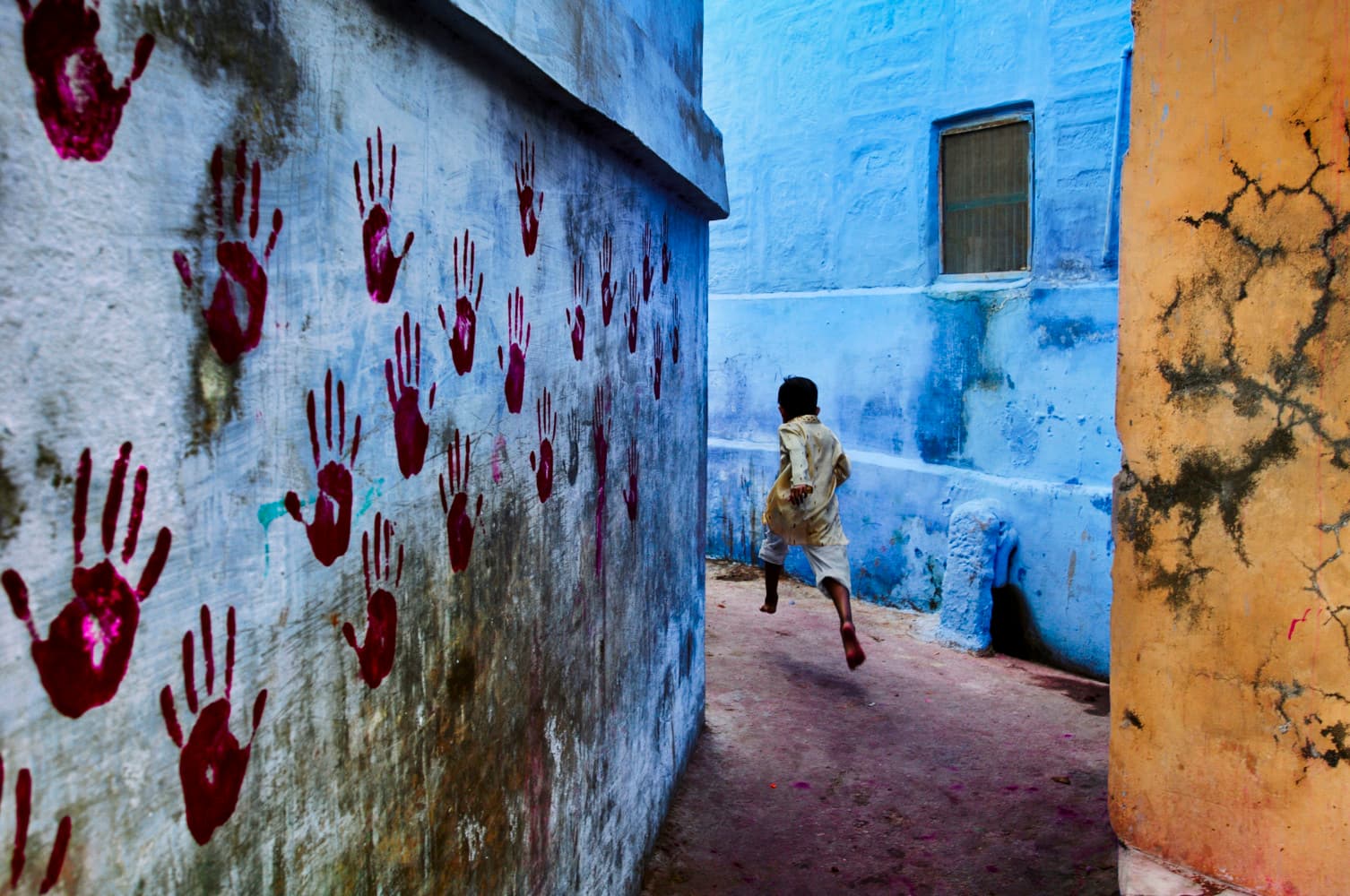 “Boy in Mid-Flight”
, Jodhpur, India, 2007
Monsoon
Project, 1983–1984, across India, Sri Lanka, and Nepal, later published as a book. McCurry chased the seasonal rains for their color and light rather than reportage in the strict sense, an early sign that his documentary work was already organized around aesthetic conditions as much as news events.
 "Monsoon" series overview
"Taylor in Monsoon", 2016
Procession of Nuns, Rangoon, Burma/Myanmar, 1994
Here repetition becomes the subject. Shaved heads, pale faces, and rose-colored garments move across the frame in a measured rhythm. Individual expressions remain visible, but the procession creates a collective geometry. McCurry uses a slightly elevated viewpoint to keep faces from merging and to let diagonal movement activate the rectangular image.
The photograph exemplifies his attraction to belief expressed through clothing, procession, and public ritual. Such signs are visually legible to an outsider, which makes them effective magazine subjects. Their legibility can also simplify: religious life becomes a beautiful pattern unless a caption or sequence restores names, institutions, and local history.
 The Iconic Photographs listing and sample-work metadata
"Procession of Nuns*, Rangoon, Burma/Myanmar, 1994
Monk at the Jokhang Temple, Lhasa, Tibet, 2000
The photograph places a human figure within a field of strong architectural color and worn surface. Rather than treating the building as neutral background, McCurry lets it press forward. The monk’s red clothing echoes and contests the surrounding tones, making the body both part of the temple and distinct from it.
This merging of person and place is one of McCurry’s signatures. It conveys belonging with great economy, though it can also imply that identity is fixed by traditional costume or sacred setting. The frame is strongest when read as one encounter, not as a complete statement about Tibetan life.
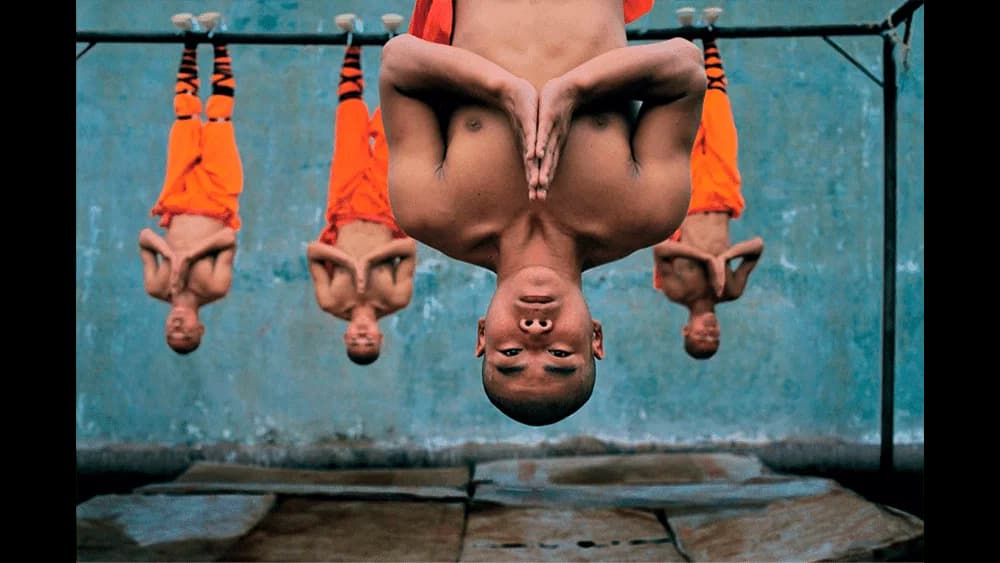 "Monk at the Jokhang Temple", Lhasa, Tibet, 2000listing and sample-work metadata
"Monk at the Jokhang Temple", Lhasa, Tibet, 2000
Afganistan
Made after the Soviet withdrawal, images of destroyed neighborhoods and civilians amid rubble that extend McCurry's original Afghan reportage across a full political arc — invasion, war, and ruin — sustaining a decades-long visual record of one country.
 Mujahideen Fighters watch Convoy, Nuristan, Afghanistan, 1979
"Mujahideen Fighters watch Convoy, Nuristan, Afghanistan", 1979
Camel and Oil Fields, Kuwait, 1991
Made during the environmental aftermath of the Gulf War, the image uses an almost apocalyptic reduction of palette. A camel and handler move beneath a blackened sky; orange fire and smoke convert daylight into an unnatural dusk. Unlike McCurry’s celebratory color harmonies, this picture makes color evidence of ecological damage. The animal’s familiar silhouette establishes scale and fragility without requiring a graphic depiction of suffering.
The photograph demonstrates that beauty and alarm are not opposites. Its formal power can bring sustained attention to an event, but it can also aestheticize destruction. The ethical question is whether composition clarifies the consequences of war or turns them into spectacle. Here the oppressive sky does more than decorate the scene: it makes the altered environment unavoidable.
 “Camel and Oil Fields,” KUWAIT
"Camel and Oil Fields", Kuwait, 1991
Boy at Ganesh Chaturthi Festival, Mumbai, India, 1996
The close portrait is organized around pigment, face, and gaze. Festival color covers the skin, transforming a participant into a vivid plane of reds and yellows while the eyes preserve a direct human encounter. McCurry often relies on this visual tension: ceremonial markings make a subject immediately striking, while eye contact asks the viewer not to see costume alone.
Yet the picture also shows how easily cultural specificity can become exotic surface. Without the festival’s name, location, and context, the pigment may register simply as spectacle. The caption is therefore not supplementary; it is part of the photograph’s responsible meaning.
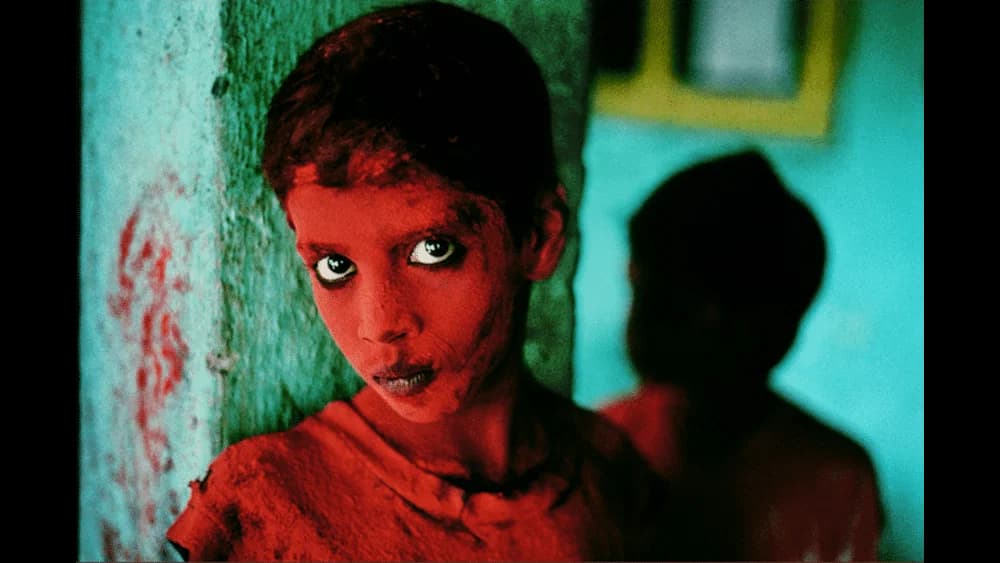 "Boy at Ganesh Chaturthi Festival", Mumbai, India, 1996
Stilt Fishermen, Sri Lanka
Figures balance above the water on narrow wooden supports, their bodies spaced against sea and sky. McCurry converts an occupation into a spare graphic system of vertical poles, diagonals, and repeated silhouettes. The distance prevents individual portraiture; labor is read through posture and balance.
The image is serene, but the history of photographing stilt fishing requires care. Repeated tourist imagery can detach a practice from its economic circumstances or from later performances made for visitors. Nothing in the official catalogue entry alone establishes the conditions of McCurry’s scene. A rigorous caption should therefore avoid romantic claims that exceed the documented record.
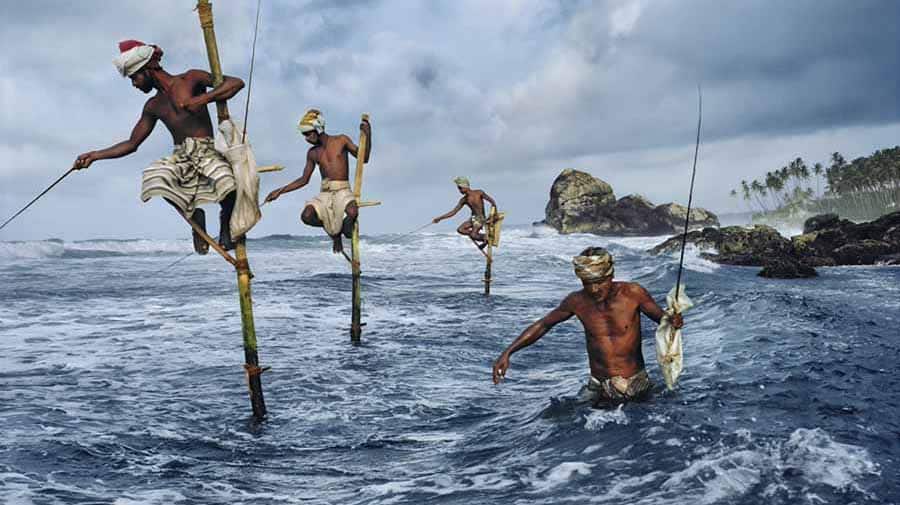 Stilt Fishermen, Sri Lanka
"Stilt Fishermen", Sri Lanka, 1995
The question of the “too-perfect” picture
McCurry’s influence is easy to see in contemporary travel photography: saturated complementary colors, centered faces, layered doorways, and moments in which gesture completes a composition. His success helped establish a visual language that now feels familiar partly because so many photographers adopted it.
That familiarity has also sharpened criticism. In “A Too-Perfect Picture,” Teju Cole argued that McCurry’s photographs of India often favor a timeless, aesthetically coherent country over the disruptions of contemporary life. The issue is not that an outsider may never photograph a place, nor that beauty invalidates documentation. It is that repeated selection creates a worldview. When images consistently privilege ritual, poverty, old architecture, and photogenic dress while newer infrastructures remain outside the frame, style can begin to look like history.
The controversy over digital alteration made the problem more concrete. In 2016, viewers identified several photographs in which people or objects appeared to have been removed or moved. One conspicuous error in an exhibition print was initially attributed to a studio technician. As further examples appeared, McCurry told TIME that he now regarded himself as a “visual storyteller” rather than a photojournalist and said he would minimize such editing in the future.
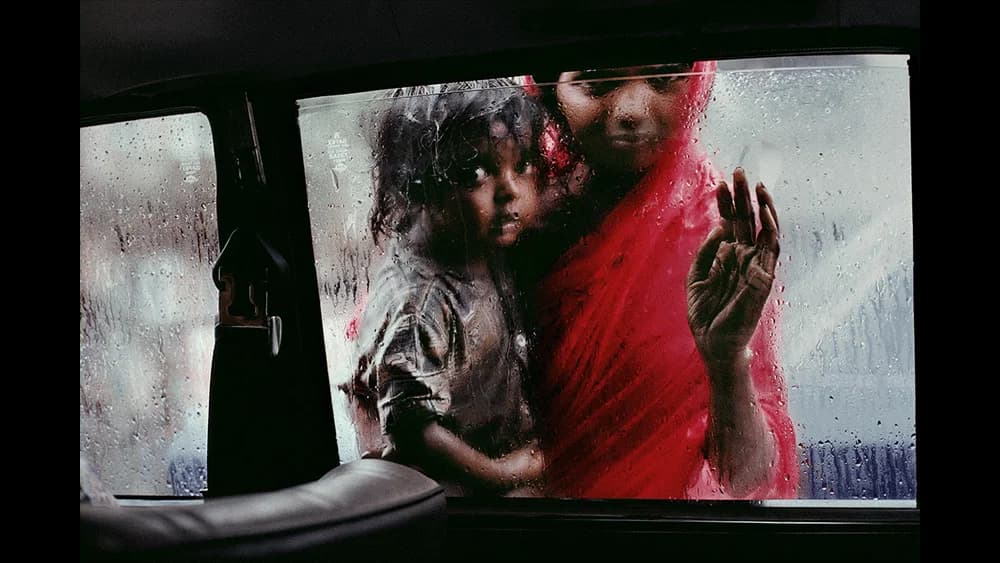 "Mother and Child at Car Window", Bombay, India , 1993
The distinction between art and journalism is legitimate, but it must be communicated before an audience interprets the image. Cropping, color balance, and tonal adjustment are normal editorial practices when they do not change factual content. Adding, removing, or relocating people and objects changes what the camera witnessed. Because McCurry’s reputation was built through documentary assignments, viewers had reasonable grounds to expect journalistic standards unless an image was clearly presented as constructed art. The episode does not erase the photographs, but it changes the terms under which later prints and books should be read.
Portraiture, consent, and the life beyond the icon
The ethics of Afghan Girl cannot be resolved by either celebrating or condemning one exposure. National Geographic’s later account states that Gula permitted the original portrait. It also describes a global afterlife she did not anticipate and initially did not know about. The case reveals several different questions often collapsed into the word “consent”: permission to make a picture, permission to publish it once, understanding of worldwide reuse, and participation in the benefits produced by that reuse.
The 2002 search restored her name to public knowledge, but it also generated a second media event around her identification. Iris analysis and other evidence were used to confirm that the adult woman was the child in the photograph. The encounter gave readers more of her history, yet the story was still organized by the fame of the earlier image. A responsible present-day essay should therefore use her name, avoid pretending to read her entire life from her expression, and direct readers to reporting about her rather than reproducing the portrait without permission.
 Girl With Green Shawl, Peshawar, Pakistan, 2002
"Girl With Green Shawl", Peshawar, Pakistan, 2002
This principle applies across McCurry’s archive. His finest portraits encourage viewers to feel that a boundary has disappeared. In reality, the boundary remains: photographer and subject may differ in mobility, institutional support, wealth, and control over publication. Acknowledging that imbalance does not make portraiture impossible. It makes captions, collaboration, and limits on reuse more important.
Books by Steve McCurry
| Book | Title | Author/editor | Year | Publisher | Why it matters |
|---|---|---|---|---|---|
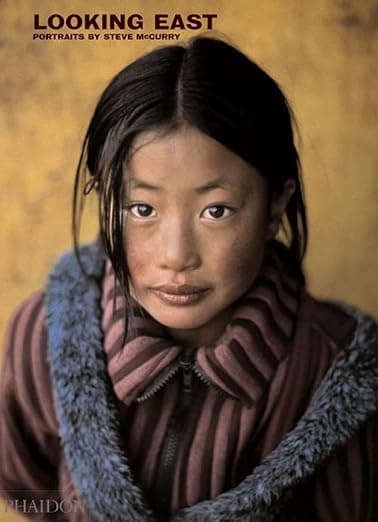 Looking East: Portraits by Steve McCurry | Looking East: Portraits by Steve McCurry | Steve McCurry | 2006 | Phaidon | The collection includes iconic as well as lesser-known portraits of children, monks, pilgrims, and travellers that McCurry has encountered on his journeys throughout Afghanistan, India, Indonesia, Malaysia, Myanmar (Burma), Pakistan, and Tibet. |
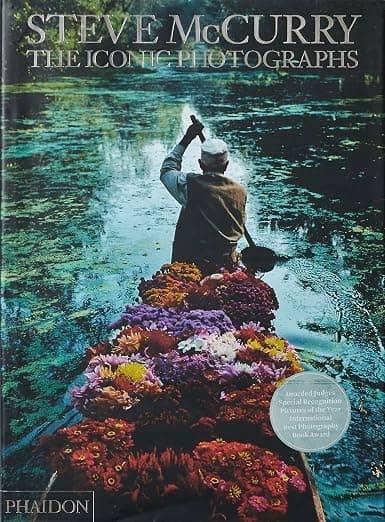 he Iconic Photographs | The Iconic Photographs | Steve McCurry | 2012 | Phaidon | This spectacular book brings together the most beautiful, memorable and evocative pictures of Steve McCurry's extraordinary career |
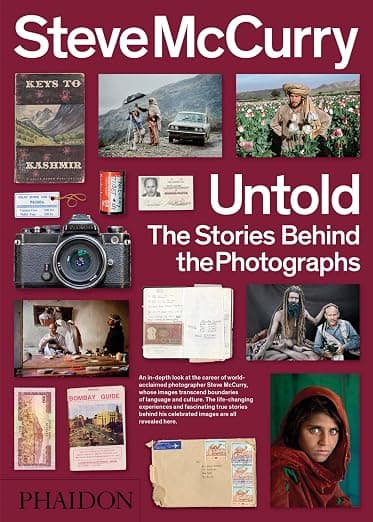 Untold: The Stories Behind the Photographs | Untold: The Stories Behind the Photographs | Steve McCurry, William Kerry Purcell | 2013 | Phaidon | The bestselling behind-the-scenes look at the career of the legendary photographer |
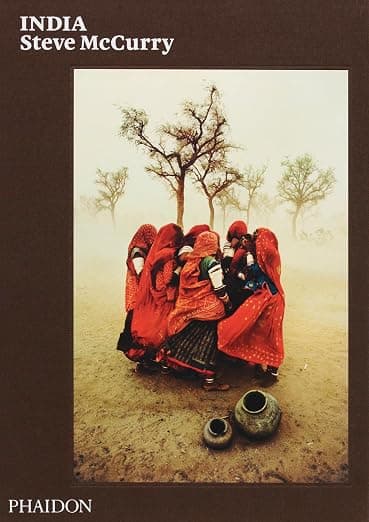 India | India | Steve McCurry | 2015 | Phaidon | The essence of India – magical, intense and contradictory – through the lens of Steve McCurry |
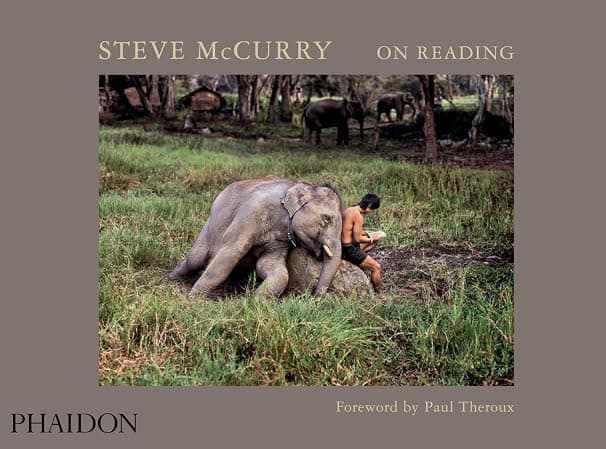 | On Reading | Steve McCurry | 2016 | Phaidon | A celebration of the timeless act of reading - as seen through the lens |
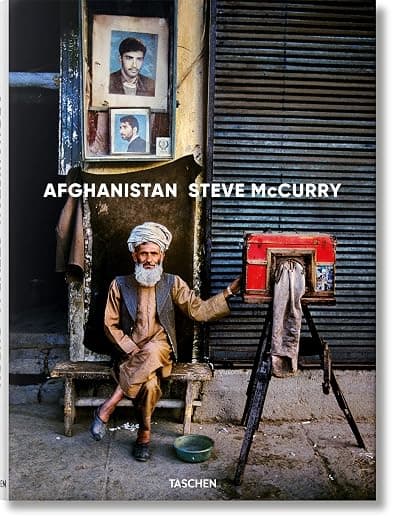 | Steve McCurry: Afghanistan | Steve McCurry, William Dalrymple | 2017 | TASCHEN | In this definitive retrospective of his work in Afghanistan, Steve McCurry has curated over 140 gripping images |
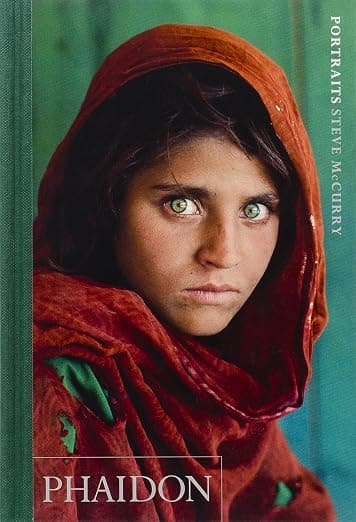 Portraits | Portraits | Steve McCurry | 2013 | Phaidon | This fresh new edition, expanded to feature more photographs than before, including some never-before published, creates an up-to-date and unrivalled collection of McCurry's portraiture. |
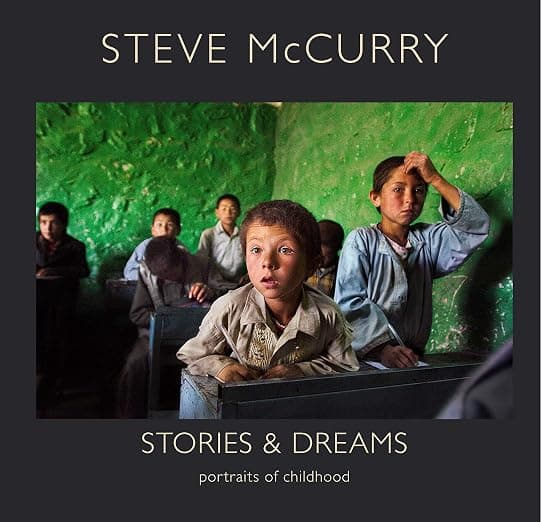 Stories nad Dreams | # Stories and Dreams: Portraits of Childhood | Steve McCurry | 2021 | Laurence King | Steve McCurry has taken an incredible selection of photographs of children, each one managing to hint at an epic story |
A major book about McCurry
| Book | Title | Author/editor | Year | Publisher | Focus |
|---|---|---|---|---|---|
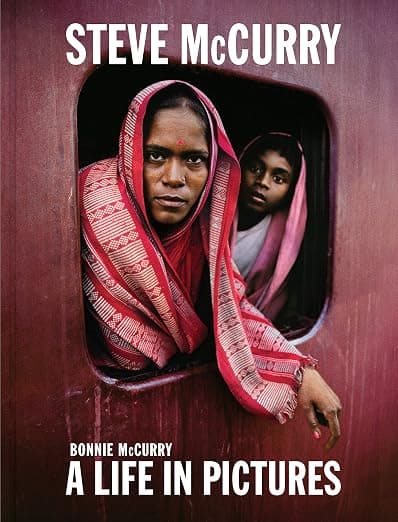 A Life in Pictures | Steve McCurry: A Life in Pictures | Bonnie McCurry, Steve McCurry | 2018 | Laurence King | The biggest and most comprehensive volume on Steve McCurry published to date and the final word on forty years of McCurry's incredible work |
Films and documentaries
| Film | Film title | Year | Director | Duration | Relevance |
|---|---|---|---|---|---|
 | McCurry: The Pursuit of Colour | 2022 | Denis Delestrac | 90 min | The feature-length Pursuit of Colour is the more substantial biographical film, following McCurry at work and at home while revisiting well-known photographs. |
 The Last Roll of Kodachrome | National Geographic: The Last Roll of Kodachrome | 2013 | National Geographic | 30 min | Understanding Steve McCurry's relationship to film: with only thirty-six exposures, selection and patience become visible parts of the process. |
Sources
Official, agency, and institutional sources
- Steve McCurry — official website
- About — Steve McCurry
- Books — Steve McCurry
- Fine Art Prints catalogue — Steve McCurry
- Steve McCurry profile — Magnum Photos
- Steve McCurry — International Photography Hall of Fame
- The Afghan Girl: A Life Revealed — National Geographic
- Steve McCurry books — Phaidon
- Steve McCurry: Afghanistan — TASCHEN
- McCurry: The Pursuit of Colour — Polar Star Films
Interviews, reporting, and criticism
- Olivier Laurent, “Steve McCurry: I’m a Visual Storyteller, Not a Photojournalist”, TIME, 30 May 2016.
- “‘Ethical lapse’: McCurry’s Photoshop scandal”, Deutsche Welle, 31 May 2016.
- Teju Cole, “A Too-Perfect Picture”, The New York Times Magazine, 2016.
- Steve McCurry — Independent Photo
- Steve McCurry biography — Artnet